What Is Xanthan Gum, and Why Is It in My Salad Dressing?
Xanthan gum is a thickener made by microbes fermenting sugars. It helps things like salad dressing stay thick and evenly mixed. That answers the question on the label. It does not answer my next question: why does it sound like something from a science-fiction laboratory?
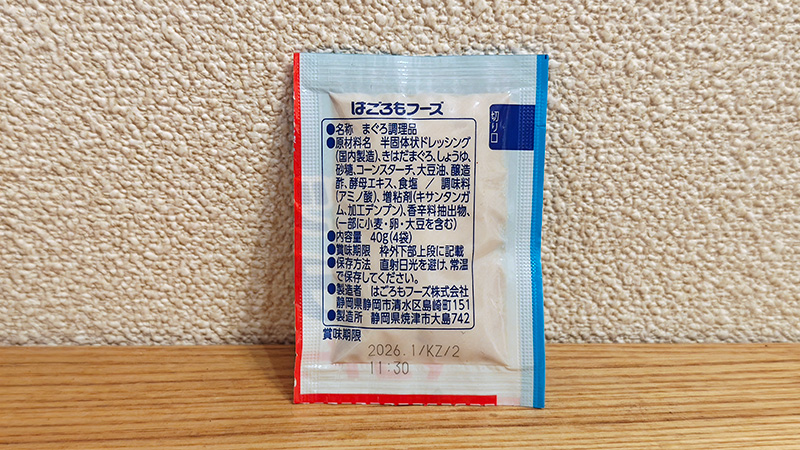
I live in Japan, where I keep seeing “thickener (xanthan gum)” on snack packets and dressing bottles. For years, I misread the Japanese name as kitansan gum. My brain tried to turn that into something involving “rare” and “carbonation.” No idea why. It seemed reasonable at the time.
Then I tried Kitasan gum, which sounded like Kitasan Black, a Japanese racehorse.
Neither theory survived contact with reality.
Oh. It’s “xanthan” and “gum.”
An entirely unexpected word was behind it. And now I had to deal with xanthan itself.
In Japanese, it starts with a “ki” sound. Where did that come from? I started thinking about xenon, the gas used in some car headlights. Apparently my brain had decided that car parts were a sensible place to look for salad ingredients.
Anyway, the answer was this: microbes ferment sugars and produce a sticky substance.
That was not where I expected this to go. Something made with help from another living thing? My mind went straight to honey and kopi luwak, the coffee made from beans that pass through a civet’s digestive tract.
Quite a range of associations for one dressing bottle.
The sugars can come from corn. Of course they can. Corn can become bioethanol, animal feed, and now the stuff that thickens my lunch. Busy plant.
The sheer scale of the Corn Belt helps explain why corn keeps turning up in these stories. This was also the sort of thing I remembered from the manga Dr. STONE.
The microbe involved is called Xanthomonas campestris, which explains where “xanthan” comes from.
Xanthomonas. Xantho… xanthan…
I have reached the point where I can type the words without feeling any closer to understanding them.
Wait, what is Xanthomonas campestris?
It turns out this bacterium is associated with black rot, a plant disease affecting crops such as cabbage and radishes.
Seriously? We have already gone from salad dressing to crop disease?
This plant disease guide from Japanese seed company Takii describes black rot in stock flowers, another member of the cabbage family. The page is in Japanese.
So I pictured someone looking at slime on a sick plant and saying, “Hang on. Could we use this?”
The less dramatic version is that USDA researchers were looking for useful microbial gums. Still, the image of scientists investigating something slimy and finding a practical material is hard to shake.
My brain compared it to the pink slime that appears in a bathroom. That is a mental picture, not a suggestion to harvest anything from the shower.
“Interesting texture. Handles heat. Might be useful.”
Chemistry, you absolute menace.
For a more technical detour, here’s a paper on the bacterium’s production of extracellular polysaccharides: An Adenosine Kinase Exists in Xanthomonas campestris Pathovar campestris and Is Involved in Extracellular Polysaccharide Production, Cell Motility, and Virulence.
Why use xanthan gum instead of aloe or seaweed?
There is no shortage of slippery stuff in the world. Aloe gel and the slick coating on kelp were the first things I thought of.
The feature that caught my attention was how well xanthan gum handles salt. Different natural thickeners behave differently, but a thickener that stays useful in a salty mixture has an obvious advantage in food.
That also explains why “seaweed is slimy” isn’t the whole answer. Choosing a thickener means choosing how it behaves in the actual recipe.
Xanthan gum is also useful across a range of acidity levels and temperatures, and it can be used in cold mixtures. Looking at the dressing bottle in front of me, I started counting the things that matter: salt, acidic ingredients, storage temperature, pouring it onto a cold salad…
Suddenly the ingredient list looked less mysterious. Someone needed a thickener that could get along with all of that.
Even freezing and thawing come into the picture. This stuff has a suspiciously long résumé.
A fairly dependable way to make slime
Aloe and seaweed have to be grown or collected, and harvests depend on conditions. With microbial fermentation, the idea is to supply sugars and maintain conditions in which the microbes can do their work.
Obviously there is more to manufacturing than tossing corn in a bucket and waiting. But the basic setup feels very industrial: reliable raw materials, a controlled environment, and tiny organisms working away.
Corn’s role in animal feed also came to mind. Once you start noticing it, corn seems to be behind half the world.
Senku heading for North America in Dr. STONE was starting to make a lot more sense to me.
Why does xanthan gum get thinner when you pour it?
The technical phrase I kept running into was “pseudoplastic behavior,” or shear thinning.
I read it once, understood almost nothing, and read it again.
My rough takeaway: the mixture can be thick while sitting still, but become easier to move when you stir, squeeze, or pour it.
Wait. My dressing has been doing that the whole time?
The texture changes while I’m using it?!
I had apparently assumed it was simply “thick,” full stop.
Being thick at rest also helps keep solid ingredients suspended. It is useful when the bits in a dressing stay spread through the mixture rather than immediately sinking to the bottom.
Then, when you squeeze the bottle or pour, the mixture flows more easily. Once it settles on the salad, the viscosity increases again.
I’m looking at the bottle as I write this. I have used dressing for years without once wondering whether it had a whole second personality when moving.
Does xanthan gum have any weaknesses?
It is used in both foods and cosmetics, which makes it sound like an ingredient that can do everything. So where does it fall short?
One limitation is that thickening isn’t the same as making a firm gel. Adding more xanthan gum doesn’t simply turn it into an agar-style solid. It remains a thickener; if you want a firm set, you need an ingredient suited to that job.
Fair enough. We already have agar.
My personal nomination for its biggest weakness is the name.
It does not sound like a “natural ingredient.” It sounds like a chemical from a factory with very impressive pipes.
Yet the basic story involves sugars and fermentation. As someone used to foods like natto—Japanese fermented soybeans—and kimchi, I find that part quite familiar.
“Made from natural aloe” sounds reassuring. “Made from natural seaweed” sounds reassuring.
“Made when microbes ferment plant-derived sugars, producing XANTHAN GUM” sounds like someone should be wearing goggles.
The name is doing it no favors.
From a mysterious label to DIY dressing and cosmetics
So that was my detour into the mysterious thickener on the label. I started with a vague idea of something made through living organisms, like honey. Following the production process led me somewhere much more industrial.
Citric acid and some amino acids are also made using fermentation. Feed sugars to the right microbes and let them produce something useful.
Tiny organisms. Big factories. Apparently this is a recurring theme.

In Japan, brands such as NICHIGA and MARGO sell xanthan gum powder. The Japanese listing I looked at was filed under cosmetic ingredients, and its product image mentioned homemade cosmetics and moisturizers.
Salad dressing and homemade skincare. Quite a career for a substance I couldn’t even read correctly.
If you want to experiment with it, a few practical points:
- For cooking, choose a product explicitly sold for food use. A cosmetic ingredient listing alone doesn’t tell you it is suitable to eat.
- Add it a little at a time. Dumping in a large amount can leave you with lumps.
- Mix and check the texture before adding more. A small amount can go a long way; follow the product’s directions for your intended use.
Slowly, then. The microbes have already done their part. No need for us to rush the last step.