Why I Switched from Heattech to Workman's Merino Wool Base Layers
Workman’s merino wool long-sleeve tops have become my everyday winter base layers. After trying Uniqlo Heattech, Mizuno Breath Thermo, and Montbell Zeo-Line, these were the ones I kept buying again.
I live in Japan, where Workman is a familiar workwear and outdoor clothing retailer. Its merino tops caught my attention at ¥1,900 each—cheap enough for me to experiment without making a major investment in winter underwear.
My usual outfit starts with a short-sleeve T-shirt. Winter brings long sleeves; colder weather adds fleece. I wanted something comfortable for ordinary daily life, rather than a technical setup for a mountain expedition.
I used to buy Heattech every winter
When Heattech first appeared, I thought it sounded impressive and bought some. There weren’t many other options on my radar for men’s warm underwear.
I ended up buying two or three tops each season. Since I normally wore short sleeves, simply covering my arms already felt warmer.
But the warmth wasn’t quite as remarkable as I’d imagined. Eventually, when I had a little more money to spend, I tried something else.
How did Breath Thermo and Zeo-Line compare?


Mizuno’s Breath Thermo belongs to the moisture-absorbing, heat-generating category. Montbell’s Zeo-Line appealed to me for its insulation and quick drying.
Breath Thermo felt fairly similar to Heattech. Warm, yes, though I wondered how much of that came from the close fit and slightly thicker fabric. I also noticed a dry feeling against my skin, and little hangnails catching on the material. That was my experience, rather than a controlled test of either fabric.
I chose the lightweight Zeo-Line L.W., partly to save money. It wasn’t especially warm for the conditions I wanted it for, but that probably says more about choosing a lightweight layer than about the whole range. The crisp, mesh-like fabric felt better suited to milder weather in my wardrobe. I appreciated how quickly it dried after I sweated.
The Amazon links in this article are searches for the named products; they don’t establish that a particular size or Japanese-market model is available locally. Models also change, so the linked listings aren’t necessarily the exact versions I originally wore.
Maybe I simply wanted a thicker layer?
Uniqlo’s thicker Heattech Extra Warm tops felt noticeably warmer to me. More fabric and a soft brushed interior made an obvious difference.
I could also have bought a heavier Zeo-Line layer, but the Japanese prices I was considering were several thousand yen per top. At that point, the cheaper Extra Warm option was tempting.
It made me question how much attention I was paying to the technology on the label, compared with the thickness and fit of the actual garment.
Then I found Workman’s merino wool tops
I’d tried merino sweaters from Japanese shops before. They were a little prickly, and the care felt like enough trouble that I went back to fleece.
So when I found a merino wool base layer at Workman for ¥1,900, I was skeptical. Would it itch? Stretch? Develop a hole almost immediately?
Instead, it felt soft, warm, and comfortable. I couldn’t find a major complaint, so I bought three.
They worked well through the first year. After about two years of use and washing, though, mine had shrunk enough that the sleeves looked cropped and the body could expose my stomach. Not quite the winter insulation strategy I had in mind. I bought another three.
Is Workman’s merino wool itchy?
Workman 11425 Merino Wool 100 Long-Sleeve Crew Neck — Japanese product page
The merino-blend sweater I’d owned had felt prickly. These 100% merino tops felt much softer against my skin. Some reviewers report itchiness, so I wouldn’t assume everyone will have the same experience.
I did occasionally feel something prickly at the neck. It turned out to be one of my own hairs stuck in the seam. Hard to blame the sheep for that.
Here’s what stood out after wearing them:
- Comfort: soft against my skin, without the prickliness I’d expected.
- Warmth: thicker than the basic Heattech tops I was comparing them with.
- Drying: quicker than my cotton tops, though a quick-drying synthetic may still win.
- Odor: I haven’t tested this meaningfully because I wash a top after a day’s wear.
- Moisture-generated warmth: I can’t isolate that sensation from the overall warmth of the garment.
The fabric feels light and fluffy despite having some thickness. My rough comparison is a thin cotton shirt versus a flannel shirt: the material and the air it holds seem more immediately relevant to my comfort than the marketing term.
Does moisture-absorbing fabric really generate heat?
I hadn’t compared otherwise identical garments with and without that property. After walking to a station in winter and sweating on a warm train, I sometimes wondered whether Heattech itself was making me too hot. But clothing, walking, and train heating were all involved. My commute wasn’t a laboratory.
KAKEN’s explanation of moisture-absorption heat-generation testing was more useful. It describes a test under controlled humidity conditions and illustrates a temperature rise that peaks and then declines.
That isn’t a promise that every garment raises my skin temperature by 3°C, or that it keeps generating the same amount of heat throughout the day. I can’t calculate a reliable real-world temperature increase from that example graph.
KE’KEN’s explanation discusses heat associated with moisture uptake. The useful distinction for me is between that process and the garment’s ability to retain warmth, manage moisture, and dry.
It also isn’t the same mechanism as a disposable hand warmer. Those use the oxidation of iron. A wool shirt doesn’t contain a little chemical heater that permanently runs out of fuel.
My practical takeaway is fairly modest: “generates heat” alone doesn’t tell me how comfortable a layer will feel after I’ve sweated in it. Fit, insulation, drying, and the rest of my clothing still matter.
Why merino, and why this price?
Merino is wool from merino sheep, and fine wool fibers can feel gentler than the coarse wool many people associate with itching. The particular garment still matters; the label doesn’t guarantee that every merino product feels identical.
Outdoor brands sell plenty of merino base layers too. Icebreaker’s 200 Oasis is one example, rather than something I’ve personally compared with my Workman tops:

Those products can be considerably more expensive in Japan. Workman appealed to me because I could try merino at a much lower price.
I don’t know exactly how Workman achieves that price, and I haven’t tested fiber quality across brands. What I can say is that these have been comfortable enough for me to keep wearing them.
There’s also a thicker version, listed in my Japanese article at ¥2,900:
Workman 11785 Merino Wool 100 Midweight Long-Sleeve Crew Neck — Japanese product page
The yen figures describe the Japanese products and prices discussed here; they aren’t international price or availability promises.
What size would I buy after two years of shrinkage?
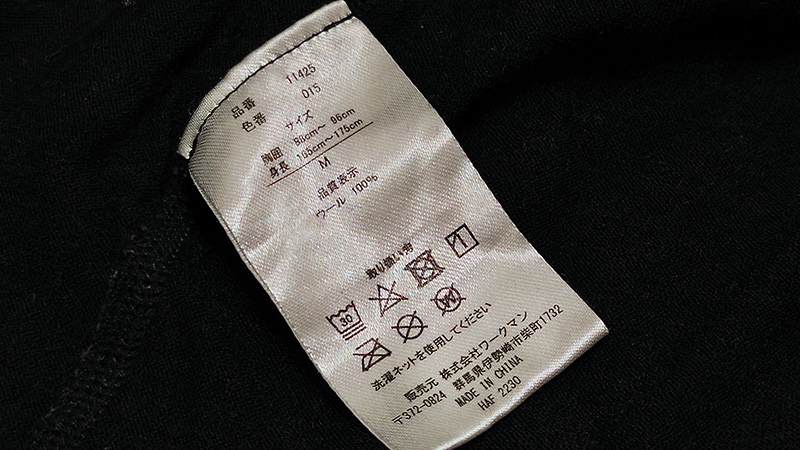
I’m 170 cm tall, about 5 ft 7 in. I bought Japanese size M, labeled for a height of 165–175 cm. It fit best straight out of the package.
Even though I used a laundry net and dried the tops in the shade, mine became smaller over roughly two years. I can’t say whether every example will shrink the same way, or whether my washing routine contributed. Next time, I plan to try L.
Before buying, I’d suggest:
- Check the actual measurements rather than assuming Japanese M matches your usual size.
- Follow the care label for the particular garment.
- Consider how a close fit would feel if the fabric shrank; sizing up is a personal trade-off, not a universal rule.
What about cotton-rich thermal underwear?
Belle Maison Hotcott and Gunze Hot Magic are other options I looked at while thinking about comfort and warmth.


The exact fiber blend depends on the model, so I’d check the listing rather than assume an entire range uses one recipe. I haven’t compared these two with my Workman tops in the same way as the layers I actually wore.
Some reviewers describe wearing heavier thermals for motorcycling or fishing. I can see why someone sitting relatively still in the cold might want something different from my indoor everyday setup. That’s an observation about their use case, rather than my own field test.
I also wouldn’t diagnose skin dryness from a clothing label alone. I noticed different fabrics feeling different, but that doesn’t establish why another person’s skin itches.
For my routine, the Workman tops have landed in a useful middle ground: warmer than the thin layers I started with, comfortable against my skin, and inexpensive enough to replace when mine eventually became too small.
I went looking for impressive heating technology. I ended up repeatedly buying a wool shirt because I liked wearing it. That’s probably the most useful result of the whole experiment.