Do Diarrhea Medicines Work Immediately? What I Learned in Japan
A medicine that relieves diarrhea doesn’t necessarily fix whatever caused it—and “fast relief” isn’t the same as an instant cure. I started thinking about that after a bout of diarrhea sent me to a neighborhood clinic in Japan.
This is my experience living in Japan and reading about products sold here. Product names, classifications, formulations, and directions are specific to the Japanese market. They don’t establish approval, availability, or appropriate use in another country. This comparison isn’t a dosing guide or a recommendation to import these products.
My unexpected trip to the clinic
The diarrhea arrived suddenly. Thankfully, I was at home rather than halfway through a train commute. I spent some time in the bathroom mentally reviewing what I’d eaten. Nothing obvious explained it.
Was it stress? A stomach bug? Something else?
After two days without feeling properly better, I went to a local clinic. I was prescribed Bio-Three combination tablets, loperamide, and butylscopolamine.
Bio-Three sounded vaguely like Biofermin, another familiar name on Japanese pharmacy shelves. The prescription product and the retail Bio-Three Hi product are different products, even though the names are similar.
The retail product contains three types of live bacteria, as described on Alinamin’s Bio-Three Hi page. That explained the “three.” It also explained why this belonged in a different mental drawer from a medicine meant to slow bowel movements.
Feeling better didn’t mean I was completely back to normal
I ate rice porridge and udon noodles, tried to be reasonably kind to my stomach, and waited.
Then I managed lunch out and thought I was recovering. Later, after eating udon at home, the diarrhea returned. Udon! Not exactly a daring culinary experiment.
The first episode had been painful enough to make me feel lightheaded. The later episodes weren’t as severe, and things gradually settled down. I wondered whether eating was stimulating a gut that hadn’t fully recovered, but I never established the exact cause.
Looking at the prescription couldn’t establish it either. Being given a particular symptom-relief medicine doesn’t prove the diarrhea wasn’t infectious. Nor does the absence of a fever settle that question.
What is in Japanese over-the-counter diarrhea medicine?
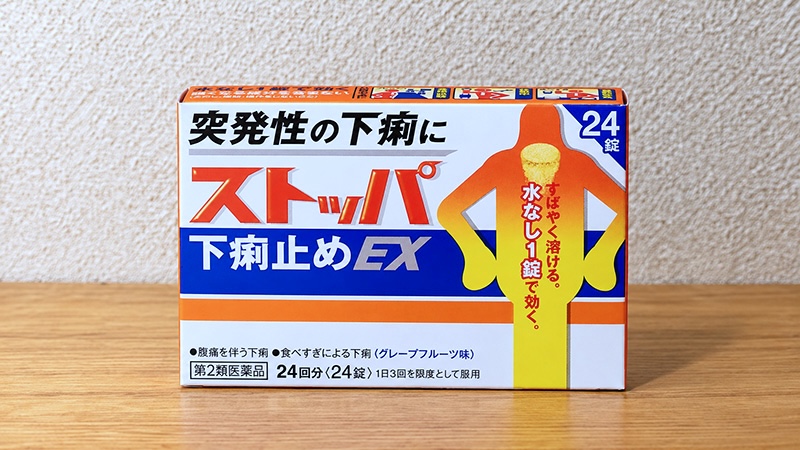
In Japan, I often see advertisements for products such as Stoppa and Pishatto on trains and in taxis. Their names practically promise to slam the bathroom door on the problem.
That is an appealing idea when you’re calculating which station has the nearest toilet.
I looked through Japanese product listings and compared their ingredients. The names below refer to the products in my Japanese article. I’ve left out doses, ingredient quantities, and prices here: the source notes use different quantity bases, some details still need checking, and linked pack sizes weren’t always consistent.
The groups are for reading convenience. Combination products can contain ingredients from more than one group, and grouping them doesn’t make them interchangeable.
| Japanese product | Ingredients noted in my comparison |
|---|---|
| Scopolia extract combinationsStoppa Diarrhea Relief EX(ストッパ下痢止めEX) | Scopolia extract; berberine tannate |
| Stoppa L Diarrhea Relief EX(ストッパエル下痢止めEX) | Scopolia extract; berberine tannate; peony root extract |
| Stoppa EX for elementary and junior high school students(小中学生用ストッパ下痢止めEX) | Scopolia extract; berberine tannate; a separate pediatric product |
| Kunihiro Diarrhea Relief Tablets(下痢止め錠「クニヒロ」) | Scopolia extract; berberine tannate |
| ButylscopolamineBuscopan A(ブスコパンA錠) | Butylscopolamine bromide, also called hyoscine butylbromide |
| Loperamide productsGarohepan Diarrhea Relief LP(ガロヘパン下痢止めLP) | Loperamide hydrochloride; berberine chloride hydrate; Biodiastase 2000; vitamins B1 and B2 |
| Tomedain Kowa Film(トメダインコーワフィルム) | Loperamide hydrochloride |
| Pishatto Diarrhea Relief OD Tablets(ピシャット下痢止めOD錠) | Loperamide hydrochloride |
| Fascon Diarrhea Relief(ファスコン下痢止め) | Loperamide hydrochloride; berberine chloride hydrate; acrinol hydrate |
| Loperamac Sat(ロペラマックサット) | Loperamide hydrochloride |
| Pitaritto(ピタリット) | Loperamide hydrochloride; berberine chloride hydrate; Biodiastase 2000; vitamins B1 and B2 |
| Tannin and berberine combinationsBiofermin Diarrhea Relief(ビオフェルミン下痢止め) | Berberine tannate; geranium herb extract; scopolia extract; peony root extract; bifidobacteria |
| Wakamatsu Antidiarrheal Tablets(ワカ末止瀉薬錠) | Berberine chloride hydrate; geranium herb extract |
| Live bacterial preparationsBio-Three Hi(ビオスリーHi錠) | Butyrate-producing, saccharifying, and lactic acid bacteria |
| Other plant-derived preparationsSeirogan Quick C(正露丸クイックC) | Wood creosote |
| Seirogan Toi-A(セイロガン糖衣A) | Wood creosote; geranium herb powder; phellodendron bark extract |
| Ontake Hyakusogan(御岳百草丸) | Magnolia bark, geranium herb, atractylodes rhizome, and swertia herb in the source notes; the list still needs checking for completeness |
Japanese labels include categories such as Class 2 OTC medicines, Designated Class 2 OTC medicines, and designated quasi-drugs. Those are Japanese categories, rather than translations of another country’s prescription or supplement rules. Japan’s Ministry of Health, Labour and Welfare explains its medicine sales system here.
Are Stoppa, loperamide, and Buscopan doing the same thing?
They overlap in the symptoms people might associate with them, but that isn’t the same as having identical actions.
Lion’s Stoppa EX information describes a combination of scopolia extract and berberine tannate. Its label explains different roles for the two ingredients, including reducing abnormal intestinal contractions and protecting the intestinal lining.
Loperamide slows movement through the bowel. It doesn’t share every mechanism of the other medicines I put in the same broad “braking” group.
Buscopan contains hyoscine butylbromide, an antispasmodic used for cramps. Relieving a cramp and treating diarrhea aren’t interchangeable jobs. Severe unexplained abdominal pain also isn’t a reason to choose a product just because it appears in this table.
What about Seirogan, herbs, and digestive enzymes?
My first instinct was to put everything into three tidy boxes: brakes, protective guards, and digestive helpers.
Useful as a memory aid. Less useful as a precise explanation of pharmacology.
Seirogan’s wood creosote, for example, shouldn’t simply be treated as another name for tannin. Taiko’s English product page describes the Japanese Seirogan Toi-A formulation. Its medicinal wood creosote also differs from industrial coal-tar creosote, a distinction the manufacturer explains separately.
Some combination products include digestive enzymes or herbal ingredients. Bio-Three, meanwhile, is a bacterial preparation, not a digestive enzyme. Recognizing an ingredient name isn’t enough to conclude that two products will do the same thing.
Does “fast relief” mean I can take it and immediately get on the train?
That’s the question I really wanted answered. The packaging can’t promise me a bathroom-free journey.
A tablet dissolving quickly in the mouth tells me about how it’s taken, not that the underlying problem is instantly resolved. Some Japanese products are designed to be taken without water; that doesn’t apply to every tablet, capsule, or herbal preparation in the table.
The cause of the symptoms, the particular medicine, and the person taking it all matter. I wouldn’t treat similar prices or repeated ingredient names as proof of equal strength or speed, either.
For me, the practical questions to ask a pharmacist would be:
- Is this appropriate for these symptoms and my other medicines?
- What are the directions for this exact product and age group?
- When should I stop self-treatment and seek medical care?
Buying two different products to experiment with isn’t the answer I want to take away from this comparison.
Hydration and the cause still matter
The NHS guidance on diarrhea and vomiting emphasizes fluids and describes when to get medical help, including signs of dehydration or bloody diarrhea. Local services and advice will differ outside the UK.
Loperamide isn’t suitable for every situation. The NHS cautions about circumstances including blood in the stool with a high temperature, severe diarrhea after antibiotics, and certain bowel conditions.
If I suspect food poisoning or have severe symptoms, I don’t want to diagnose the cause from a drug advertisement—or assume a probiotic makes the situation safe to manage alone.
What I took away from the whole detour
Normally, I’m fairly casual about gut health: cheese, yogurt, and the occasional snack containing lactic acid bacteria. Buying a big bottle of tablets makes me feel as though I’ve signed up for another daily subscription. I’d rather not turn everything into homework.
This time I had a prescription and followed the instructions I was given. That experience doesn’t establish a schedule for another person, or make the retail products equivalent to what my doctor prescribed.
Still, reading the ingredient lists was useful. The dramatic brand names stopped looking like seventeen entirely different solutions, and the familiar ingredients stopped looking like proof that everything was basically the same.
I began with “Which medicine stops diarrhea immediately?” I ended with a better question: what problem is this particular medicine intended to address, and is it the right one for this episode?
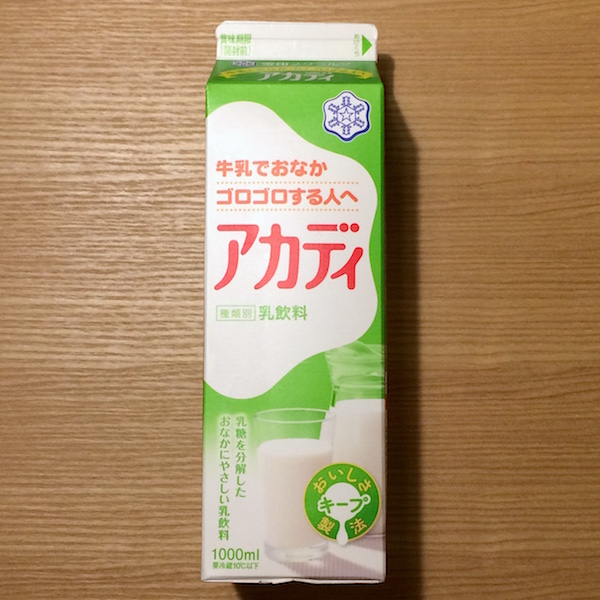
Milk gives me stomach trouble for a different reason. That was another rabbit hole: