I read a stack of cleaning books to make our home comfortable
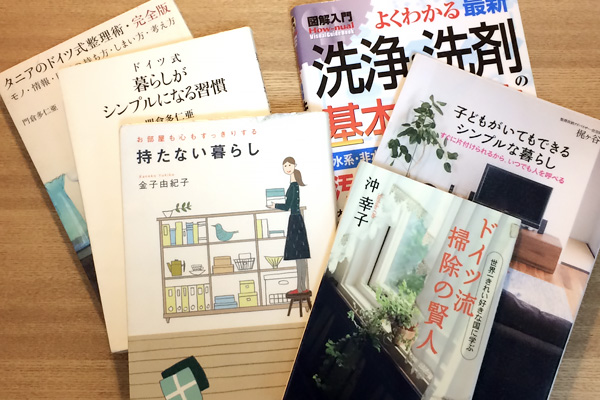
I live trying to own as little as possible—and went overboard into a stark room. Fewer things, but comfort and usability are low. It is slightly inconvenient and annoying to clean: a failed minimalist vibe.
After the kids arrived, kid stuff crept in. We bought some, received some; even the dishes cabinet holds plates we never use. Toys multiplied. I thin them out by age, but sometimes the kids notice and undo my work.
I like being at home, so I want it to feel fun, be easy to maintain (mainly cleaning), and still work with kids around. I searched Amazon, read reviews, and grabbed a handful of promising books. Reading many at once showed lots of overlap, which was fun to spot.
「お部屋も心もすっきりする 持たない暮らし」

I read this about 10 years ago and had forgotten most of it, so I reread it.
- Easy to buy/receive, hard to throw away.
- Even selling/donating is hard work.
- So for things you rarely use, substitute or borrow instead of owning.
The vibe is “use a small set of things you genuinely chose and love.”
That’s hard without a good eye. You often need to go through a phase of acquiring too much—testing what you like—before you can pare back. I feel more capable of choosing than 10 years ago, so maybe I can finally practice this.
It also says “everyone uses doormats by default, but you can skip them to make cleaning easier.” I’ve managed a few ideas like that.
「タニアのドイツ式部屋づくり―小さな空間ですっきり暮らす整理・収納のコツ」ほか
“German style” caught my eye, so I read three books by the same author. They mostly repeated themselves—one would have been enough.


“German style” = ultra rational. It felt like an evolution of “持たない暮らし”: only keep what you use now, skip obligatory gift exchanges on anniversaries and give when you genuinely want to, do small daily cleaning instead of a year-end blitz, bake cleaning/tidying into your routine, customize for your own usability, make the entryway efficient, and so on. Very functional, almost masculine—right up my alley.
Yet it is not about making a barren room: add an old piece inside the house, hang art, etc.—simple things I “knew” but hadn’t done.
One book on “simple habits” said: sort junk mail at the door and toss the unwanted stuff immediately; consolidate key info (contacts, bank IDs, etc.) into one notebook; toss paperwork into a “sort later” box. I already do much of this, so it felt like permission to keep going.
「ドイツ流 掃除の賢人―世界一きれい好きな国に学ぶ」

Another Germany book. The blurb promised “Germans are clean freaks; 15 minutes to sparkling!” I dove in excitedly, but the main points, repeated over and over, were:
- Wipe messes immediately.
- Heat helps loosen grime while it’s still warm.
…and that’s about it. Underwhelming.
「子どもがいてもできるシンプルな暮らし すぐに片付けられるから、いつでも人を呼べる」

In one phrase: a refill-and-label fiend. The author and kids are sensitive to house dust. Want fewer dust triggers → need to clean → make cleaning easy. Their cupboards/drawers look like Instagram’s #冷蔵庫収納.
I’m curious about decanting, but I haven’t chosen bottles/containers yet. Consumer goods are sized/shaped to shout “buy me,” which is seller-driven. Once you own them, you can reshape for your own storage (e.g., fridge-friendly containers). Reviews say this book is “all about looks,” but I think there’s function there.
Still, you add work on your side: airtight containers, hygiene when refilling, minding expiration dates. The bar is high; it takes prep. Some reviewers wanted easy how-to tips and got grumpy.
The kid room photos show a fair number of toys/books—not ultra-minimal. Storage is neat and the kids tidy up (with help on off days, the book says). The siblings are girl/boy, so I wondered if toys will double (Precure plus Kamen Rider) as the younger grows.
One gripe: labels in both English and Japanese felt excessive. Some people even print “sho-yu” because they can’t read “soy sauce”—I’d prioritize usability over bilingual novelty.
There’s a blog:
「OURHOME 子どもと一緒にすっきり暮らす」

Another book by a parent—twins this time. I opened it thinking “how do they do it?” but it read like a product catalog. Not my taste; the featured goods didn’t help me. There’s a blog; reviewers say that’s enough.
One idea I liked: in summer, put a cold drink pot where kids can reach and let them self-serve—like preschool style.
Blog:
They also have a book on steel-rack storage. When they showed their setup elsewhere, readers pointed out weight-limit issues. Steel racks are sturdy and handy, but many makers produce near-clones; mix brands and parts may not fit, or sizes are off.
Steel racks
From what I know, the toughest is Home Erecta. Each shelf holds 135 kg—strong enough for big aquariums. It’s pricier (probably the highest in this category). American brand: sturdy, simple, rust-resistant.
Easiest to find: Luminous Rack by Doshisha—common in home centers and Don Quijote. We use a large one in a closet for vertical storage.
Cheaper than Erecta; poles come in multiple thicknesses, so you can reduce visual bulk or fit tight spaces. Thinner poles = lower load capacity, so beware. Also rust-resistant, but the plating gets rough over time.
Plastic-goods giant Iris Ohyama sells them too (“Metal Rack” is the literal name), with many sizes/colors. Also in home centers. No rust-proof coating, apparently.
http://www.irisplaza.co.jp/Index.asp?KB=KAISO&CID=250
Prices: Luminous and Iris are roughly half of Erecta. If you’re rack-savvy and want long life, you’d pick Erecta, but most people will go with affordable Luminous.
「図解入門よくわかる最新洗浄・洗剤の基本と仕組み」

I switched gears to how detergents work. It explains soil removal at the molecular level—clear, but jargon-heavy; I need more chemistry chops. It did deepen my understanding of surfactants. I want to retry later.
Recommendations also showed “抗菌と殺菌の仕組み”, which looks interesting.
Fun fact I learned: in sesqui carbonate (“sesqui” means 1.5), that “sesqui” literally means “one and a half.” I’d assumed it was a brand name—like thinking “monthly parking” is a company.
「ナチュラル洗剤でちょこっとピカピカ掃除!」

This book pulls out just baking soda, sesqui, oxygen bleach, and citric acid. Baking soda and sesqui overlap; baking soda’s main role here was “abrasive,” so I debated skipping it.
Sesqui is handy for laundry and cleaning—worth having spray and powder forms. I want to try it in the sink strainer for food scraps.
Related: I wrote this on food scraps:
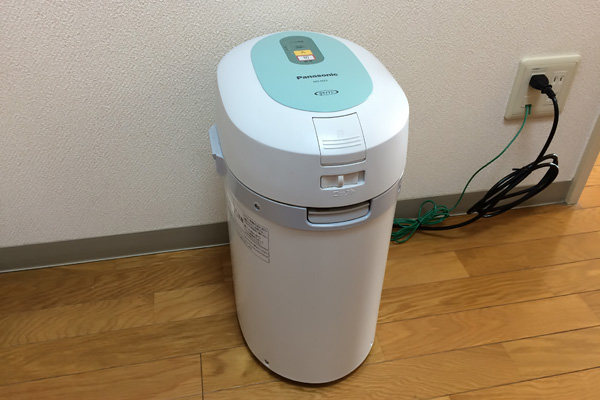
Citric acid is good for limescale, but leaving it on metal can rust it—so caution. The back of the book has a chart; the source was “Soap Encyclopedia.” For detailed specs on each natural cleaner, that site is better:
「プロの凄腕お掃除 コツとワザ ぐうたらさんでもすぐできる!」

This was excellent. The earlier books were mindset/decluttering or clever storage that didn’t fit my home, leaving me wondering, “So…what do I actually do?”
This book is pure tactics. Cleaning methods for entryway, toilet, bath, bedroom—everything in one place, ready to use. Brands like Kao/Lion share bits online, but this consolidates it all.
The methods are supervised by a company called Michel Home Service—turns out they’re a housekeeping/housework-outsourcing firm:
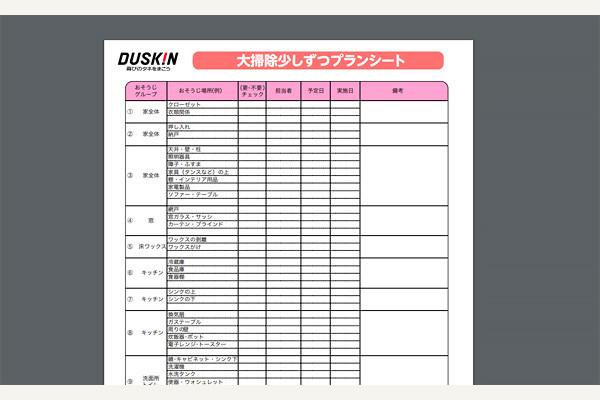
I only knew Duskin in that space; now I know another. I probably won’t hire them—I’m more “I’ll be the housekeeper myself!”—but their site was an interesting read.
「子供とペットとスッキリ暮らす 掃除術 東(ひがし)さんちのアイデア50全部見せ」
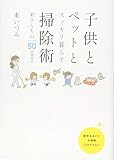
Also good. I wondered how a household with kids plus pets manages—four cats! The big photos/illustrations made it easy to grasp.
It’s based on a blog:
http://ameblo.jp/sukkirikurasu/
The blog includes food posts; the book sticks to cleaning, so it’s focused. The content feels like the Michel book, but with surprises: pulling the fridge out to clean behind it; always using both hands for speed, etc.
I sometimes do the two-hand thing when washing dishes:
- Right hand rinses suds off.
- Left hand sets the dish in the rack.
Or I’ll bump a magnetic cabinet door shut with my heel as I turn—“kachak!”—because it’s almost closed. Is that actually efficient? Who knows.
Ameblo is said to have intense niches; sounds fun to explore.
Takeaways
Did this reading binge boost efficiency? Roughly:
Start by owning less—baseline.
- Why reduce? Lower management cost.
- Quality over quantity. Slowly upgrade to things you truly like.
Audit “stuff parked for no reason,” reduce if possible.
- Entry and toilet mats can go.
- Especially with kids, they get dirty; you rarely wash them. Better to skip.
- I already do this—only put mats out for guests.
Keep cleaning tools near where you use them.
- Lets you wipe while you notice, or while brushing teeth, etc.
- Prevention beats cure, same as health.
- Ideally you can do quick, low-stress touch-ups.
Small-box storage is a bit of work but effective.
- Standardizing container sizes makes storage easy.
- Requires buying matching boxes = some upfront cost.
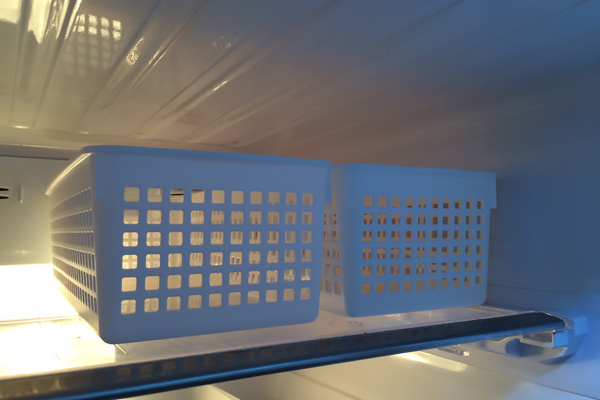
- For small items, 100-yen baskets work; white/clear blends in.
Decanting is helpful but an advanced move.
- Think liquid refills in the fridge, etc.
- White or clear containers are recommended; clear shows contents.
First step of tidying: give things a “home.”
- I never grokked this until I read: buying a car with no garage is dumb—street parking forever. Same as owning things with no storage: “illegally parked.” I’ll issue tickets!
- With a home, you can put it away fast.
- If there’s no space/closet is full, it’s time to reassess.
- You don’t have to trash everything; keep what matters.
- If you hate a gifted item, photograph it and toss—record kept. The giver’s “mission” ended when they handed it over.
- German proverb: “Tidiness is half of life.”
- Meaning: less time wasted searching.
- Owning things is a cost in this era.
Turn the entryway into a breakwater.
- Filter out junk/noise before it enters.
- Like pollen control.
- Keep scissors/knife there to open bills fast; toss flyers immediately.
Oxygen bleach is hot.
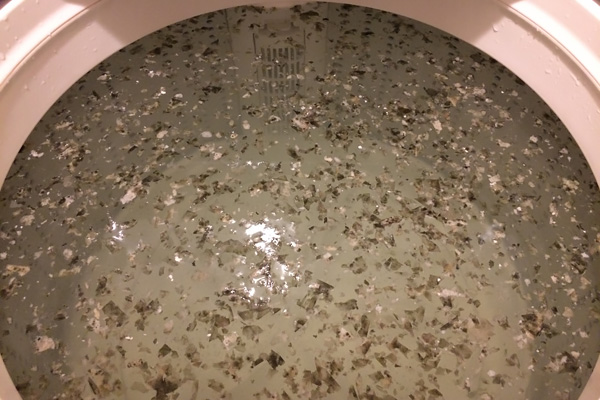
- Apparently mountains of “seaweed” peel out of washer drums.
Dumped a whole 600 g bag in, added hot water, ran 1 minute—got this:
- Natural cleaners are cheaper than synthetics, so you can use them freely.
- Oxygen bleach lacks the chlorine stink of hypochlorite (e.g., Haiter), so it’s good anywhere with water.
- Works as a laundry detergent substitute; for light daily soil, sesqui alone can do it.
Learn cleaning sequences—it pays off.
- If you live in a home, cleaning is inevitable.
- Not “mandatory for all humanity,” but better to know than not.
- It’s a lifetime skill—worth acquiring.
That was…a “summary”? It ballooned. I just read a lot, okay!