Stopping cold drafts from aluminum window frames under the curtain
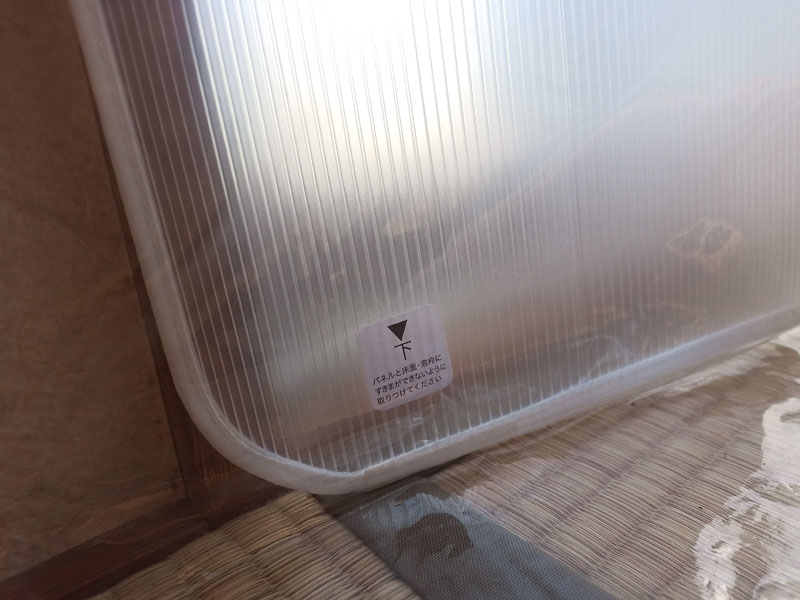
Our aluminum sash windows get freezing. We sleep on tatami with a floor-length curtain, and in winter a cold draft slips under and hits our faces. Here is the best mix of off-the-shelf products we found.
Vinyl curtain + draft-stop panels + sash insulation tape + window film
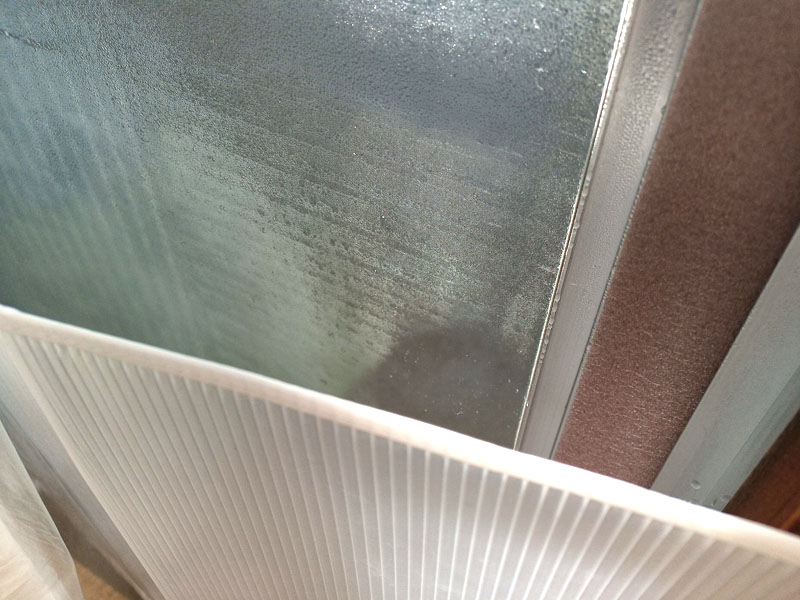
You end up layering products around the window. Total is about 3,000 yen to cover one room. Listed by effectiveness:
Vinyl curtain

This alone solves about 80% of the problem. It is like a mini greenhouse curtain and blocks the draft when it reaches the floor. Just hang it on the window side of your normal curtain; setup takes ~5 minutes. Two sheets are included—overlap them so the seam is not a gap, and lay them flat on the floor with no wrinkles.
Because vinyl is airtight, it caps the cold air. Key is letting it touch the floor.
Only weakness
Because it hangs where your curtain rail is, the sides can leave small gaps. Place weights or install it carefully to minimize gaps.
Draft-stop panels

Common in winter at hardware stores. Alone they feel weak, but paired with the vinyl curtain they shine.
They attach with Velcro to the window frame, so there are no gaps and they do not shift if bumped. Some sets include both curtain and panels.
Bonus: condensation on the glass will not stick to the vinyl curtain. With a humidifier, windows sweat; if the curtain is close, it can touch the wet glass. The panel keeps them apart—very handy.
Aluminum-sash insulation tape

Aluminum sashes get cold and condense. This tape insulates a bit and helps with condensation. It comes in three colors—silver blends best (I accidentally bought bronze). It helps, but it is not a root fix; buy it for condensation control. For cold drafts, start with the vinyl curtain.
Drawback
With a humidifier, condensation can form on the tape itself. After a few seasons it can gather dust or mold; clean occasionally or replace every few years.
Window film

I used this for condensation. It adds a tiny bit of insulation but the area is small, so it is mostly a placebo. It absorbs drips, but it can mold or leave residue when removed. If you use the three items above, you may not need film.
Summary
Japanese windows run cold and condense, but store-bought gear helps a lot. We remove the setup when winter ends; curtain + panel are not very bulky.
About 3,000 yen up front can lower heating costs, and this lasts 5+ years (the vinyl curtain has been in use since 2017). Looks are a bit shabby, but the comfort is worth it.
Update (2025-11-30)
The vinyl curtain is in its eighth year. One hook hole has started to tear and the vinyl feels a bit stiff, so it might be nearing the end of its life.
Because it hangs behind a lace curtain, you barely see it. Performance is unchanged, so I’ll keep using it until it finally gives out.