My go-to sore throat kit (lozenges, sprays, and caution)
I grew up in Japan with tonsils that flare up easily, so I keep a small throat kit ready—lozenges for daytime, sprays for when swallowing hurts, and a note to myself to go to an ENT early. Convenience stores here stock most of these, so I can grab them on the way to work.
Note: I found a Ryukakusan option on Amazon.com. Links below still point to Amazon.co.jp—sorry if they don’t auto-switch for you.
How I use them (fast version):
- Mild scratch: keep a lozenge in my mouth often, sip warm drinks, run a humidifier.
- Sharp pain when swallowing: switch to a spray to hit the spot directly, keep lozenges between meals.
- Fever, can’t eat, or swelling that blocks food: stop DIY and see an ENT (ear, nose, throat doctor).
Do throat lozenges or sprays work better?
Lozenges are gentle and easy to keep in your mouth while commuting; sprays are more direct when one side of the throat feels stabbed. I rotate both and avoid anything that dries the throat out.
Ryukakusan herbal throat candy is my first line
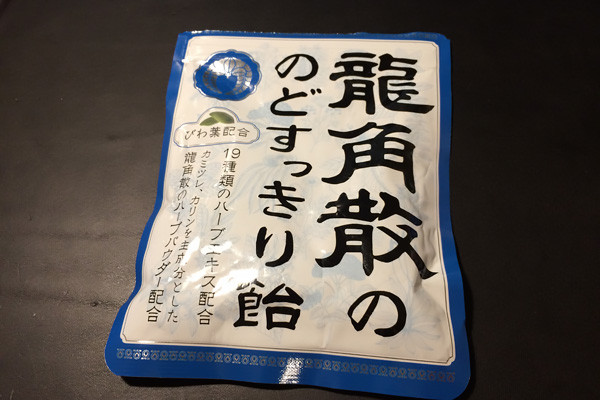
These look like regular candies but have herb powder on the outside, so the first smell is a bit “traditional Chinese medicine.” I got hooked because they calm soreness fast. The blue bag has a zip top, no individual wraps, and is pocketable (about 15 cm × 11 cm). I usually finish a bag during a one-week sore throat.
Blueberry version is tasty but individually wrapped
The cassis/blueberry flavor is sugar-free and easy to carry, but opening each piece gets annoying when you need one every 10–20 minutes—and the wrappers pile up. I go back to the zip bag.
Other flavors and the “120max” with extra herb powder
Amazon Japan lists yuzu, shikuwasa, white peach, and mint, plus this 120max bag with 20% more powder and royal jelly. Looks sweet and yellow; next time I’ll try this set of six when a cold hits.
Powder sticks and troches that fizz
There’s also “Ryukakusan Direct,” a stick you pour straight into your mouth—no water. It fizzes lightly and coats the throat. Mint and peach are the two flavors I’ve seen.
The troche version looks like the same package but is mango flavored.
Honey-only candies and Vicks drops are popular around me
Friends and coworkers who don’t like herb scents swear by this 100% honey candy from Senjakuame. It’s sold in most Japanese drugstores.
Vicks Medicated Drops are a childhood staple here (the bee on the box is nostalgic). The instructions say “3 drops per use, 4–6 times a day,” which sounds like 3 at once, but it actually means 1 drop → dissolve → second → dissolve → third. Otherwise you’d finish the 20-piece box in a day.
Throat spray I repeat-buy
Sprays save me when swallowing is painful. I don’t taste much difference between brands, but I avoid bottles that leak or have stiff caps. Nodo Nuru Spray (clear mint) is reliable, doesn’t dribble, and has a gentle menthol feel.
Extras I tried
Manuka honey: effective but pricey
Manuka honey is supposed to have stronger antibacterial power. A coworker trend pushed me to try it; the first spoonful tasted odd, but it grew on me. Then I looked at the price—small jars are ¥3,000–5,000. The UMF numbers (like SPF for sunscreen) tempt you to buy higher ratings, so watch your budget.
Honey-daikon syrup: I gave up on it
The winter classic here is soaking diced daikon radish in honey and drinking the syrup. I’ve made it; it tasted weird and didn’t seem to help, so I stopped. If it were delicious, shelf-stable, or good for more than the throat, maybe—but it wasn’t for me.
Bottom line: see an ENT early
An ear, nose, and throat clinic can prescribe anti-inflammatory meds and expectorants that work faster than any lozenge. Last time I went in at the “hmm, this might get bad” stage, it never worsened. Keep the lozenges and sprays for comfort, but if pain is sharp, if you get a fever, or if swallowing food is hard, find a nearby ENT and let them take a look.