Running C-cell Plarail trains on AA batteries—with spacers
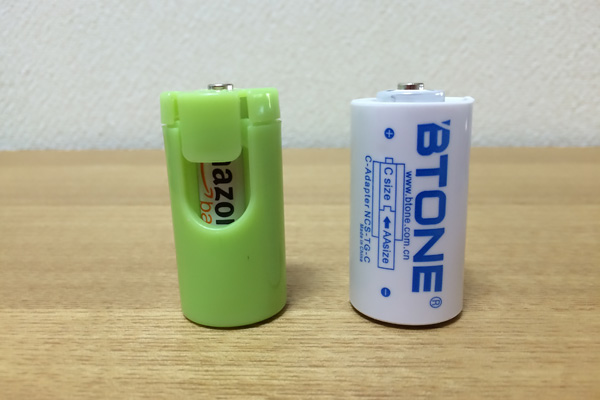
Plarail trains run on C batteries. Newer models use AA more, but plenty still need C. I once heard “popular streamliner Shinkansen = AAs because C cells don’t fit the tapered nose.”
Yes, Eneloop makes C cells and a charger:

But I already own an AA Eneloop charger, and we don’t play Plarail enough to justify buying the C kit. Enter spacers.
100-yen spacers exist, but…
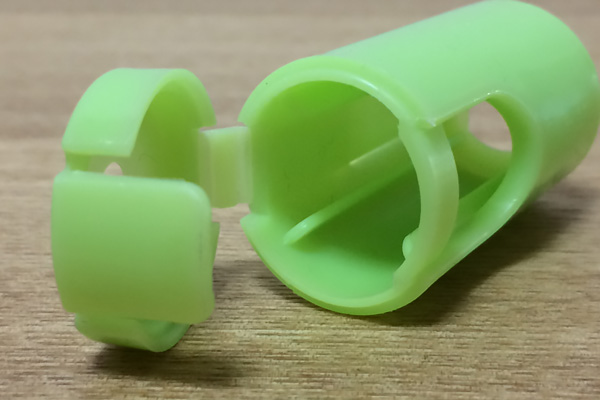
These came in a multi-pack. The negative terminal sits recessed, so some devices won’t make contact. I thought “genius!” when I first saw them, but they were finicky and sat in storage. Plarail sometimes didn’t power on, so I bought another.
Reviews looked legit (some debate over “same as Panasonic or not”), but overall worked. Ten for ¥1,000—about ¥500 cheaper than Panasonic’s.
BTONE spacers
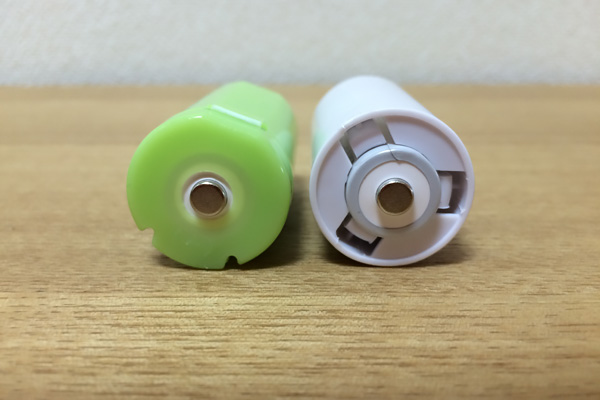
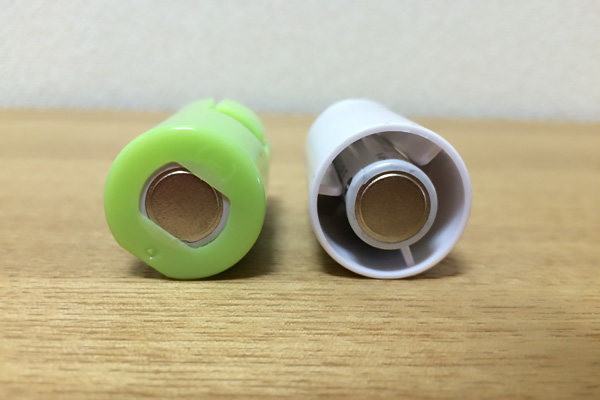
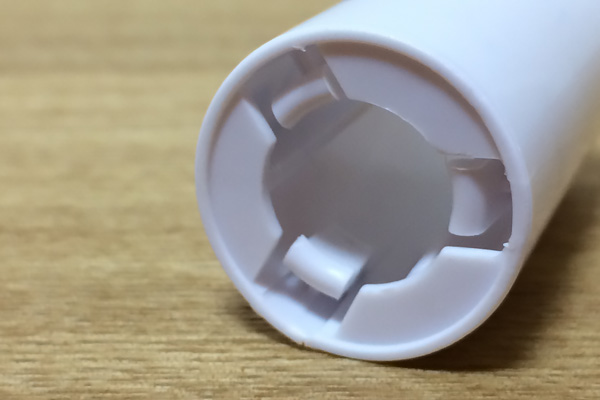
Unknown brand BTONE, but the tube keeps AA length unchanged. The AA locks in firmly—no wobble, no contact issues—worked fine in Plarail.
Loading into Plarail
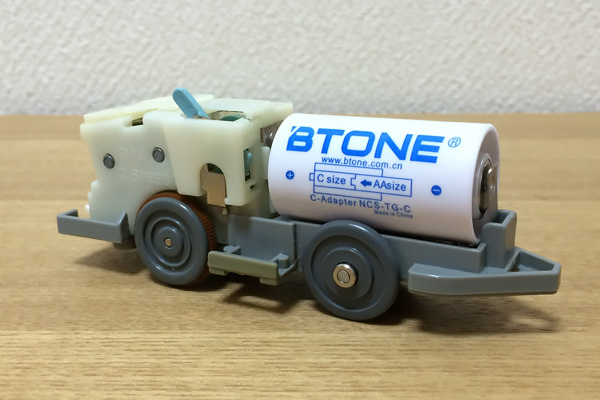
Drop it in like this.
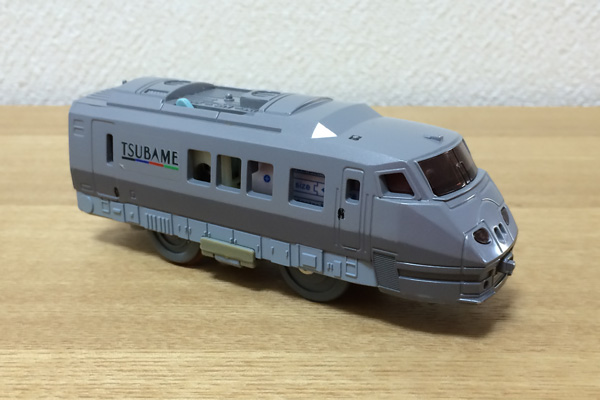
This one’s Relay Tsubame. With the shell on, it runs happily. I misread it as “Nichirin” at first; the car says TSUBAME. Maybe Tsubame ran as Nichirin at some point—train naming is confusing. Kyushu limited expresses all look cool; my favorite is the blue Sonic 883.
Lots of spacer styles
What I used adapts one AA per spacer; multi-cell types exist:


The red one was re-listed recently (no reviews now), but it used to have stars like the yellow.
Spacers maximize AA/AAA availability. Buying C Eneloops just for one flashlight is inflexible; spacers likely suit most households better. Plarail should run longer on AAs this way.
Bonus: stash spacers in an emergency bag to back up large flashlights, or for a camping lantern you use a few times a year.