New life season notes: advice I’d give past-me

It’s April. You can spot students and new grads starting fresh—the awkward air gives it away. Seeing them makes me recall my own rookie days. If I could restart with today’s experience, what would I do differently? Here are the notes I’d hand to past-me. Think “New Game+” in life.
Note: in Japan, “new life” season is April when school and work years reset. Many countries flip that—U.S./Canada/UK typically start in late August–September, Australia/New Zealand around January–February—so adjust the timing to your local calendar.
It’s okay to retreat
Sounds abrupt, but: it’s okay to step back. Not “run from everything,” but tactical retreat to stay safe—especially with people.
If someone is toxic, you can back away. Schools and workplaces feel like closed worlds; when you can’t see beyond them, it seems like that small society is all that exists. I used to think I had to endure, or everything would be over.
In tight spaces you can’t fully escape, but you can keep things neutral and distant, and if it’s bad, ask for help. You rarely change someone’s core behavior; trying to “reform” a person you find intolerable is a waste. Refusing to yield at all might work short term, but if you snap, recovery is hard. Better to avoid the win/lose mindset and exit early.
If “ask for help” doesn’t fix it: in school, escalate via parents/education board. At work, transfers or even leaving are options. Second-new-grad roles exist; leaving a bad fit is allowed.
My own “keep distance” lessons
I lucked out with great friends as a student. As a working adult, I met all kinds of people. Einstein said:
Common sense is the collection of prejudices acquired by age 18.
Noticing differences usually means you have your own biases too. I tried to pick up what seemed useful and not cling to “my” common sense. Some people offered so many “nope” moments that I simply kept my distance.
I’m frugal by nature and catch myself thinking, “Maybe there’s a good side,” “I haven’t seen everything yet,” “Am I qualified to judge?” So I’d stick around longer than necessary, even when it felt off. Some of that was experience-building; some was wasted time.
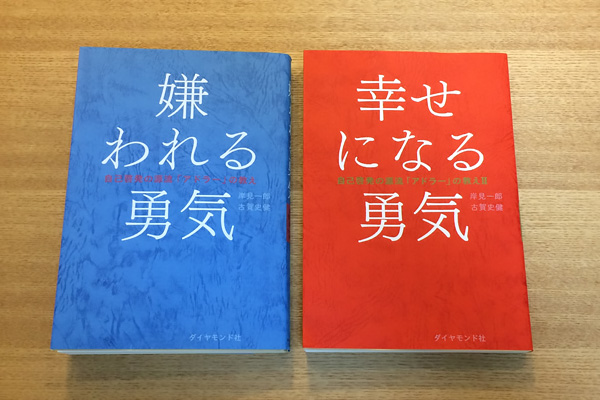
My stance probably matches that book’s vibe (I haven’t read it; thousands of reviews hint at it).
Books that shaped me
Adler psychology got trendy a few years back; I skipped it. Earlier I found my bearings from older titles:
Retro picks—very “Showa dad.” CEOs often cite them. Both are classics: Miyamoto Musashi’s Book of Five Rings (individual tactics) and Sun Tzu’s The Art of War (group strategy). Both hammer on “don’t die.” In swordfights, death ends the game; prepare to survive first, then find ways to win.
Modern version: new students get told “lose the student mindset,” “act like an upperclassman.” Humans don’t flip switches that fast. If you have even one clear goal, focus there; the rest can be “good enough.”
Whether it’s club, work, communication, sleep schedule, or not venting/anger/mounting on people—pick a goal and keep it. Schools and companies are organizations; you need some alignment. If everything clashes, maybe the initial choice was off. But you can nudge yourself to fit a little while protecting and growing your core.
When I didn’t know my purpose, my goal was “Don’t die until I do something.” Flip it and you get “being alive is already profit.” Hit a wall? Think “Present-me can’t (yet); who knows in 10 years?” Keep moving, without burning out.
Other reminders to my rookie self
Not so much “powerful New Game+,” more “stubborn My Game.” Random skills I’d ingrain early:
-
Write things down.
- New environments flood you with info. Note → review → make it yours. Otherwise it’s overwhelming.
-
Learn GTD early.
- Getting Things Done: The Art of Stress-Free Productivity keeps task lists from exploding and builds the skill of triage.
-
Track expectations vs. results (Drucker tip).
- When you make an important decision, write down the expected result. After a set time (e.g., 9 months), compare outcome vs. expectation. This reveals strengths/weaknesses so you can lean into one and shore up the other. Amazon.com : Peter Drucker