How many sugar cubes are in this juice? A reality check on carbs
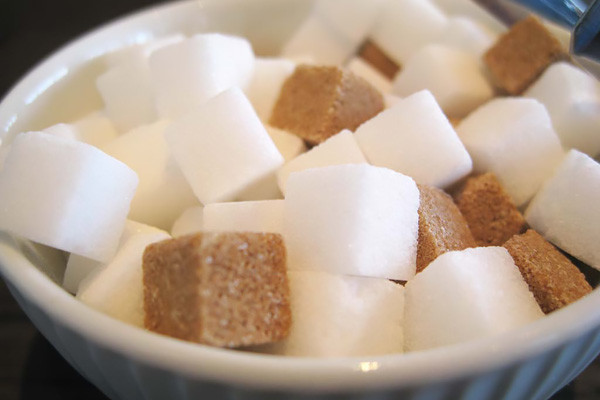
There’s a long-running meme here: “this juice has X sugar cubes!” with a pyramid of cubes meant to scare you. I grew up hearing “sweet stuff is bad!” so the pile looks guilty as charged. Add buzzwords like low-carb or sugar-free and it feels like we should live on water and lettuce.
But then I see claims like “a bowl of rice equals 20 cubes” and “a slice of bread equals 14 cubes.” Huh? If sugar cubes are evil, what about all that starch? I sanity-checked carbs, sugar limits, and calories.
TL;DR
- Carbs = sugars + starch + fiber; 1 g carb ≈ 4 kcal. Sugar is a subset of carbs.
- Adult daily energy needs: ~2660 kcal (men) / ~1995 kcal (women).
- WHO/FAO: keep free sugar under 10% of total energy → about 20 cubes’ worth, not 200.
- Rice/bread in “cube math” quickly outpace soda. The problem is total balance, not one villain ingredient.
“So what’s actually bad?”
After a quick search I found this contradictory set of takes:
- Ten sugar cubes are terrible (sure)
- One bowl of rice equals twenty cubes (wait, what?)
- One slice of sandwich bread equals fourteen cubes (what is happening)
So is sugar bad, or are carbs bad, or only “refined” sugar bad? I started from the basics.
Start with carbohydrates
“Sugar” sits inside the larger carb category. The rough breakdown:
- Carbohydrate
- Sugars (mono- or disaccharides, non–sugar alcohol)
- Other carbs (like starch)
- Dietary fiber
That already explains some confusion: sugar is a carb, starch is a carb, fiber is a carb. “Carb-free” isn’t the same as “sugar-free,” and “natural” starch still ends up as glucose in your body.
Daily energy needs
From Japan’s health ministry data, daily energy needs average ~2,660 kcal for men and ~2,000 kcal for women (more if active, less if sedentary).
Reference: 一日に摂取する適正なカロリー(適正カロリー) は - 厚生労働省
4 kcal per gram of carbs
One gram of carbohydrate yields about 4 kcal.
Sugar cubes are almost pure carb: ~3.9 kcal per gram. One cube is ~3 g, so let’s round to ~12 kcal per cube.
“So men can eat 221 cubes a day?”
That’s the wrong takeaway. Yes, 2660 kcal ÷ 12 ≈ 221 cubes by calories, but WHO/FAO says free sugar should be under 10% of energy. For 2660 kcal, that’s ~266 kcal → ~22 cubes. The rest of your calories need to come with protein, fat, fiber, and micronutrients. You can’t live on sugar cubes.
“Look at all the sugar in this drink!”
@kuminchuu少しですし、写真も見づらいですが。。
日本のジュースの砂糖の量‼
ワンダモーニング13.5g、ポカリ33.5g、コカコーラ56.5g、三ツ矢サイダー55g、カルピスウォーター56g、午後の紅茶19g
pic.twitter.com/nSFVG8dtKt— しーずー (@ALLISWELL_u5) February 19, 2014
Fun visual, but you can’t reconstruct a drink by “add sugar cubes + water” alone. The sports drink above (Pocari Sweat) is ~125 kcal per 500 ml ≈ 10.4 cubes by calories—close to the 33.5 g figure—but it’s designed off IV solution chemistry (electrolytes, osmotic balance). It’s not just sweet water.
If you convert everything to cubes (on purpose)
First, the obviously wrong but illustrative math: daily needs in cubes.
| Item | Calories | Cube equivalents (≈12 kcal each) |
|---|---|---|
| Adult male daily energy need | 2660 kcal | ~221 cubes |
| Adult female daily energy need | 1995 kcal | ~166 cubes |
| WHO sugar guideline (10% of 2660) | 266 kcal | ~22 cubes |
| Bowl of rice (150 g) | 235–250 kcal | ~20 cubes |
| 6-slice white bread (1 slice) | ~170 kcal | ~14 cubes |
Drinks
| Item | Calories | Cube equivalents |
|---|---|---|
| Pocari Sweat 500 ml | 125 kcal | ~10 cubes |
| Cola 500 ml | 225 kcal | ~19 cubes |
| McShake Vanilla (M) | 323 kcal | ~27 cubes |
| Starbucks Matcha Crème Frappuccino (Tall) | 330 kcal | ~27 cubes |
Alcohol
| Item | Calories | Cube equivalents |
|---|---|---|
| Rosé wine 720 ml | 554 kcal | ~46 cubes |
| Beer 350 ml | 140 kcal | ~12 cubes |
| Sake (2 go) | 208 kcal | ~17 cubes |
Rice
| Item | Calories | Cube equivalents |
|---|---|---|
| Rice bowl (medium) | 252 kcal | ~21 cubes |
| Rice ball | 170 kcal | ~14 cubes |
| Sushi set (1 serving) | 624 kcal | ~52 cubes |
If you rail against “19 cubes in cola” while eating sushi and wine, you’re still ingesting piles of “cubes” by calorie math. The villain is overeating and imbalance, not one specific food.
A few sugar myths that bugged me
Some comments around that tweet said “refined sugar is empty calories.” Quick notes:
- Sugar types: roughly two buckets—unrefined (like brown sugar, maple) and refined. Saying “all refined sugar is evil” would also ban granulated sugar, brown crystal sugar, and even rock sugar.
- “Bleached white sugar is poison!” → It’s crystallized sucrose. Same chemistry as brown sugar; the process isn’t a bleach horror story.
Sources (JP): 白い砂糖の真実、そして三温糖との関係|農畜産業振興機構, 原料糖から精製糖 : 大日本明治製糖株式会社 - “White sugar absorbs too fast, dangerous!” → Absorption speed relates to whether it’s mono-, di-, or polysaccharide. Table sugar is sucrose (glucose + fructose, a disaccharide). It’s not “instant bloodstream teleportation,” and plenty of starch digests quickly too.
Reference (JP): 炭水化物、タンパク質、脂肪 - 11. 栄養障害 - MSD マニュアル家庭版
Takeaways
- Sugar is one kind of carb; starch is another. Both end up as glucose.
- Use the WHO free-sugar cap (~10% of energy, ~20 cubes’ worth for an average adult) as a guardrail, but focus on total balance: protein, fat, fiber, micronutrients.
- Soda isn’t health food, but neither is pretending rice or bread are “pure and safe” while ignoring the same cube math you applied to cola. Context beats scare-pyramid photos.