How many days can you reheat bathwater?
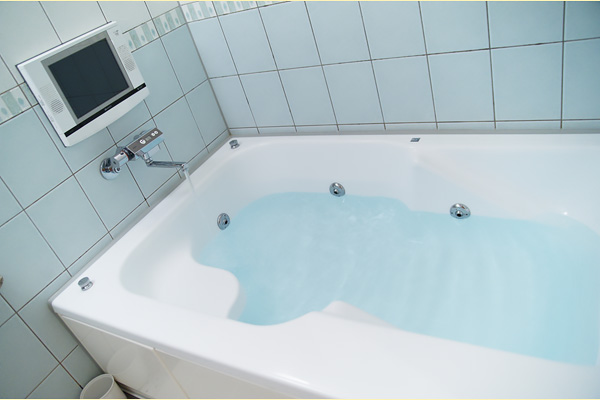
When I lived with a tub that couldn’t reheat, I’d use the leftover water for laundry the next day and then drain it. After moving to a bath with reheating, I wondered: “How many days can I roll this water over?”
Answer in my house: by day 2 the bottom was slimy and I gave up.
Reheating is for the same day, not for “eco” multi-day use
“Reheat” subconsciously felt like “save water tomorrow.” Tossing out a tub of water felt wasteful, so I wanted to believe I was saving money by keeping it. In reality, reheating exists so the last family member can still enjoy a hot bath that day, not so you can stretch water for 2–3 days.
Manufacturers don’t say “reuse for 3 days”
I skimmed bath maker sites (LIXIL, Toclas, Cleanup, Takara, Panasonic) and they all brag about insulation reducing reheats that day—none promote multi-day use. Water-heater makers only show cost simulations for reheating; no one recommends or forbids reuse.
Reheat vs. fresh fill: which is cheaper?
Instinct says reheating lukewarm bathwater must be cheaper than refilling. Turns out warming cooled water to 40°C costs only a few yen less than heating fresh water. The difference comes from local water prices, which vary: areas with clean groundwater are cheap; big cities with heavy treatment are pricey. If your water is cheap, saving pennies may not feel worth it.
Gas type matters too: city gas vs. propane. I even saw sad notes like “propane + high water rates = a trip to the public bath is cheaper than bathing at home.”
Bottom line: conditions vary by city, so there’s no universal “reheat wins.”
| Low water cost | High water cost | |
|---|---|---|
| City gas | Gas is cheaper; cost gap is only a few yen—choose by convenience. | Gas is cheap but water is pricey, so fresh fills feel expensive; reheating often wins. |
| Propane gas | Propane is expensive, so fresh vs. reheat is a wash—decide by hygiene/effort. | Worst combo. Propane + high water can make a trip to the public bath cheaper. |
Hygiene: what happens over multiple days?
I actually felt gross when the tub turned slick, so I dug in. Reheat fans say “it isn’t cloudy,” “no smell,” “chlorine kills microbes,” “no one dies from a home bath,” “we’ve reheated for 10 years.” Friends do multi-day baths without getting sick, so I kept reading.
That slime is bacteria
We keep goldfish. To break down waste, we add “bacteria” to the tank; once they multiply, the glass and pump get slimy. It’s the same in a bath. Warm 35–40°C water is perfect for bacterial biofilm.
Legionella
Searching bath risks turns up Legionella. Some sources say no deaths; others say yes. I read these:
旅館・公衆浴場等におけるレジオネラ症防止対策について - 厚生労働省
レジオネラ症とは - 国立感染症研究所
IDWR: 感染症の話 レジオネラ症 - 感染症情報センター
東京都感染症情報センター » レジオネラ症 Legionellosis
レジオネラ症とその予防対策/千葉県
レジオネラ - Wikipedia
Key points they agree on:
Legionella in the lungs can cause pneumonia.
- Mist/aerosol is the risk (you’re fine if you only drink it).
- The pneumonia type can be fatal.
- There’s a feverish type that resolves quickly.
Infants and people in their 50s–70s are more susceptible (weaker immunity).
- Men get it more than women.
Case reports since 2007 show a recent rise:
down↓down↓up↑up↑up↑up↑.- Japan sees a few deaths each year.
Main sources: hot springs/public baths and ultrasonic humidifiers.
Homes with dirty heaters/pipes could also be risky; ultrasonic humidifiers are an overlooked source.
Why hot springs and baths show up often
Likely because large, complex baths are hard to clean thoroughly. Like brushing teeth, some spots get missed; bacteria and Legionella grow there.
Legionella was identified in 1976 and became a notifiable disease in Japan in 2003. I used to grumble that mountain onsen smell like chlorine now—turns out it’s to prevent infection.
Legionella enters via lungs, so showers/jacuzzis with mist are riskier. Someone online asked, “Can it enter from your butt in a dirty bath?” I thought “hmm, maybe?”—turns out no. Relief.
Ultrasonic humidifiers and Legionella
Wikipedia lists an outbreak where three newborns in a university hospital got infected and one died; the suspected source was a humidifier. Another fatal case involved a 60-year-old at home.
Humidifier types:
Steam: hot steam, power-hungry but hygienic and low-maintenance.
Evaporative: barely raises humidity; cheap to run; filters need cleaning.
Hybrid: evaporative with a bit of heat; efficient but pricier; still needs cleaning.
Ultrasonic: cool mist, cheap power and unit; risky if you skip cleaning.
Ultrasonic models took off in Japan ~10 years ago: safe to touch, low electricity. But they don’t heat water, so if pink slime grows inside, contaminated water gets misted everywhere. Legionella rides in aerosol, turning it into a bacteria sprayer. Yikes.
Which humidifier to pick? (my criteria)
Young, living alone → “Ultrasonic” is fine; clean sometimes. Small room? A tiny “evaporative” is okay.
Couple without kids → probably can afford “hybrid or steam.”
Family with kids → for hygiene, choose “steam.”
Older couple → “hybrid” if budget allows; otherwise “steam” for less maintenance.
Personally the easiest is steam. Zojirushi sells a humidifier that’s basically a hot-water pot; it uses more power but humidifies well, no smell, no scary steam, and scale wipes out with citric acid in spring.
I used to run this evaporative bucket + fan model; reviews are good, but I hated cleaning the filter. A pink film built up in the bucket, the filter darkened, and it smelled like a crayfish tank.

I cleaned often and replaced filters, but the filter costs added up, so I quit.
So, how many days can you reheat?
- If you’re confident in your immunity, do as you like.
- If you have infants or anyone 50+ at home, limit to same-day use.
If you’re reheating to save money, check your local water rates first—it helps set expectations. But if you live where water is already cheap, don’t expect huge savings.