BMZ Insoles Fixed My Collapsed Arches: Overpronation Relief Review
I am flat-footed and my legs tilt from the soles upward, so I also have O-legs. To fix the lower-body tilt I needed to build a foot arch. I tried toe spread-clench drills and towel scrunches, but I kept quitting. I went looking for a tool to make arch work automatic and found BMZ insoles.
A different approach than other insoles
What I have on hand:
- Sof Sole (IMPLUS shock-absorbing, FIT2 neutral arch)
- Shock Doctor (Trainer)
- BMZ (Cuboid Balance, Ashi-tore)
Most insoles focus on cushioning impact and stopping foot slippage. BMZ is different: it aims to let you use the sole muscles. That matched my goal and felt good in use, so I bought a second pair (Ashi-tore).
My O-leg journey
As a kid I often rolled my ankles inward (landing on the shoe outer edge)—classic inversion. In high school I read “fix O-legs to gain leg length” in a fashion mag and tried towel-wrapped squats and stretches—no change.
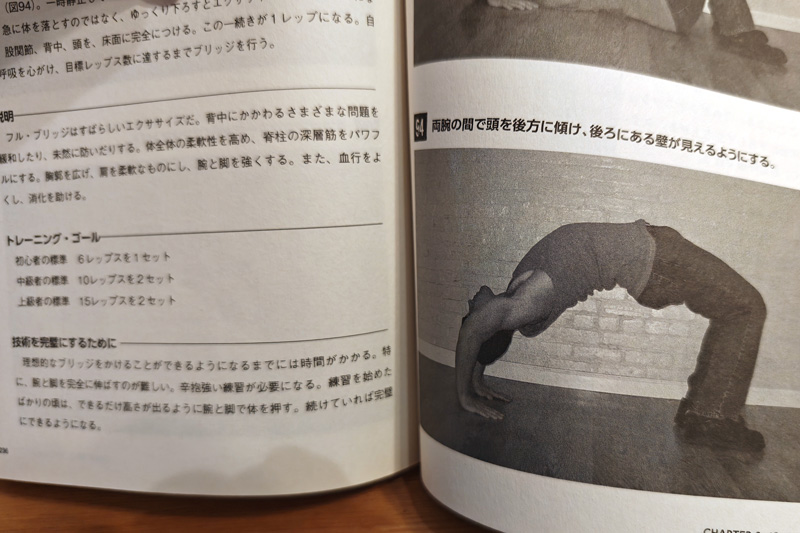
Ten years ago this book worked in a week; it straightened me from hips to knees:

About six months ago I read this self-check book; it concluded my soles were the weak link:

The second book is neat: you self-check the cause of your O-legs, then do stretches that match that cause. Doing the wrong direction can worsen things, so find the cause first, then fix it.
In my case the knee gap below the knees would not fix. The book says “below-knee O-legs are tough” and often come from ankle tilt, which comes from weak/no arch. So: build the arch with lots of exercises.
Cue me trying toe spreads and towel scrunches again—and quitting (again). Doing them during a commute or driving would be ideal, but shoes get in the way, so they never became habit. Enter BMZ.
Using BMZ to revive the arch
I never had an arch to revive, but BMZ helps build one.
BMZ theory page (JP)They hype a “theory,” but boiled down:
| Maker | Idea |
|---|---|
| Most brands | Stop wobble by supporting the sole (arch itself stays the same) |
| BMZ | Restore the arch so the sole can support itself |
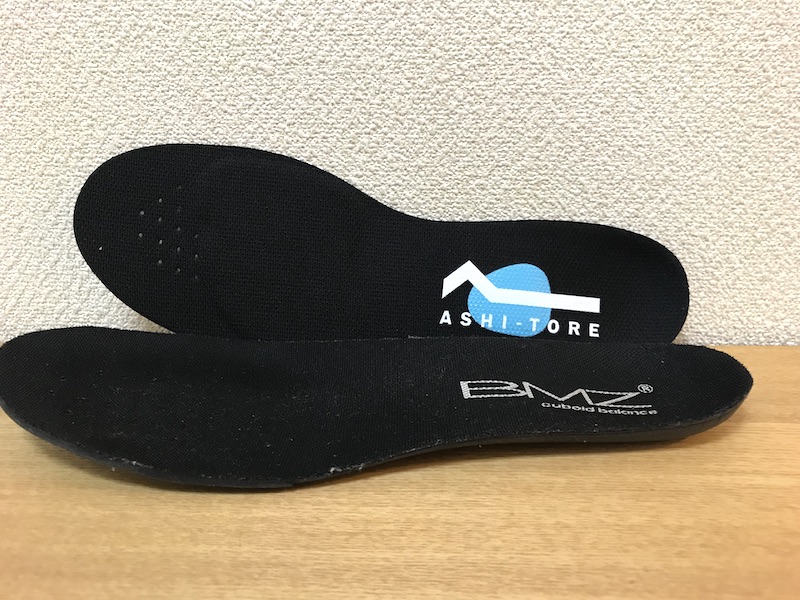
BMZ insoles lightly lift the cuboid bone (opposite the arch). It feels like wearing shoes with a slightly raised heel shifting weight forward. In the photo, the light-blue circle shows the bump. On Cuboid Balance, the bump is near the “B” in the logo. Most insoles only lift the arch—this is different.
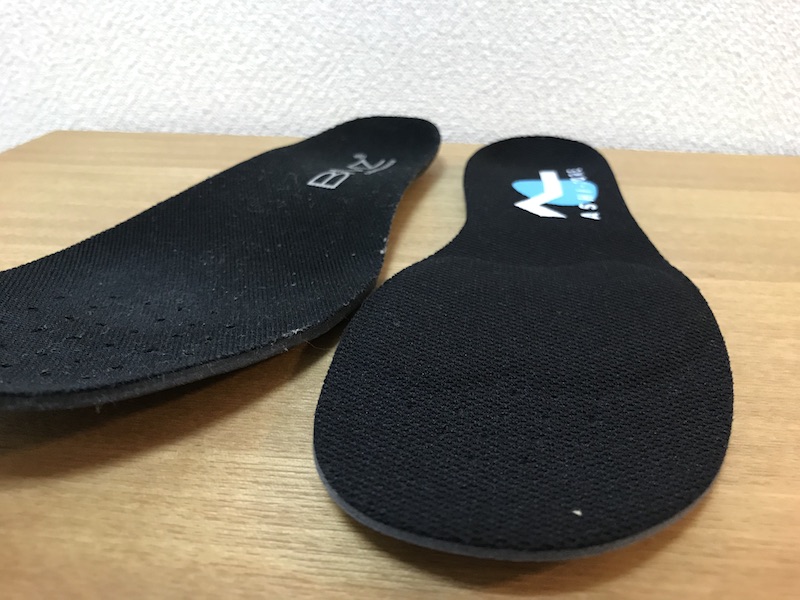
What happens: walking automatically engages the toes. You end up gripping and pushing off, basically the towel-scrunch motion while walking. I started wearing only BMZ pairs; to rotate shoes I bought the Ashi-tore model. Now walking = arch training and walking = below-knee O-leg improvement. Each toe push reminds me to straighten posture, so I naturally walk with less distortion.
Ashi-tore has extra lift under the toe joints, making it easy to flex toes and grip the ground.
BMZ downside
Only one: the graphics are ugly. Even in nice shoes, taking them off looks sad. I wish they spent a bit more on the visible design (the packaging can stay low priority).
Other insole makers (quick notes)
Before BMZ I mapped other makers and saw patterns:
| Type | Description | Price |
|---|---|---|
| Sports | Hold the heel, support arches that sag with fatigue, cushion impact; thin versions for spikes | 5,000-10k |
| Standing work | Soft cushion to cut sole fatigue | 1,000-3k |
| Foot-training | Correct to make the foot work right (only BMZ) | from 2k |
Sports roots often trace to ski boots. “Foot health” searches surface Germany. Modern sports insoles use plastic/carbon heel cups. Brands also sponsor athletes; the number of testimonials is telling.
SIDAS
SIDAS — 1975 France, from ski boots to many sports. Huge lineup by sport, plus socks/sandals/supports. Tons of athlete voices.
Sof Sole (IMPLUS)
Sof Sole — 1991 USA brand from IMPLUS. Multi-use shock absorption. The red/yellow shock model is soft and comfy daily; FIT2 holds the arch during jogging landings.
They also own Spenco, loved for work boots:
![[スペンコ] Spenco RXコンフォート 40-212-03](https://m.media-amazon.com/images/I/41dHIfjgx6L._SL160_.jpg)
Superfeet
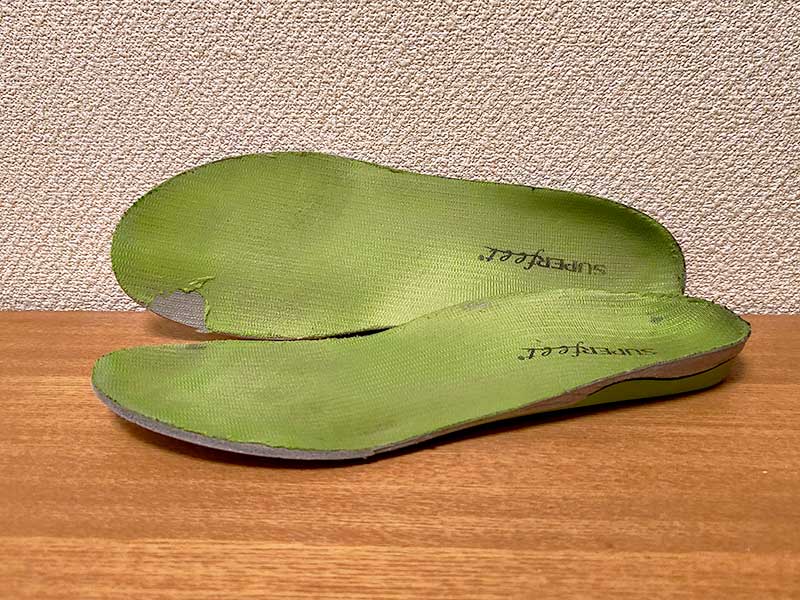
Superfeet — 1964 USA. Ski origins, podiatrists involved. Uses rigid heel cups with good shock absorption. About 5,000 yen; common for daily/outdoor use; sold at Montbell, etc.

formthotics
formthotics — New Zealand. Popular with runners and for knee/back pain. Surprising foamy, super light material that molds to your foot over time (self heat-molding). Simple design.

Reviews are full of runners saying it eased knee pain and boosted pace for ~6,000 yen. They recommend it for marathon 4-7 hour runners—so maybe not for me.
Bane
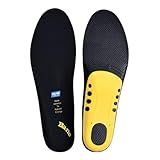
Ba2ne — Japan. Sports-style insoles at slightly lower prices, sized for Japanese feet. Site is messy; think “Japanese Superfeet” basics.
Zamst
Zamst — 1991 Japan, famous for knee/elbow supports. Insoles since 2017: heel cups, proper padding, arch support; already hundreds of reviews. Good sizing guidance for online buys.

Shock Doctor
Shock Doctor — 1993 USA, started with mouthguards (that kind of shock). Also knee supports and groin protection. Insoles focus on shock absorption plus heel support; popular with standing jobs.

Others
- Dr. Scholl: grocery checkout staple; heel gel you can touch in-pack (hence dirty displays). Around 1,500 yen; heavy but nice for thin-sole Converse.
- Pedag: German leather insoles for dress shoes (Germany = foot-health nerds like Birkenstock).
- Sorbothane: “artificial muscle” cushion. Name sounds like a combining robot; it is really just cushion.
Takeaways
- If work or sport hurts your soles/ankles/knees, try insoles.
- If you want to improve, not just support, sole function, BMZ is great.
- Want to build an arch in daily life and get healthy faster? BMZ turns walking into training.
BMZ entry models run about 2,000 yen, easy to try. Higher models add cushioning/antibacterial features, but I mainly needed the training effect.
When you browse Amazon you will see tons of no-name insoles claiming plantar fascia fixes for 1,000-2,000 yen. Those are sketchy generics. If you want a safe bet, buy New Balance insoles instead—lots of sizes, reliable comfort, nice soft cushion.