Hunting for a bread knife that stays sharp and slices clean
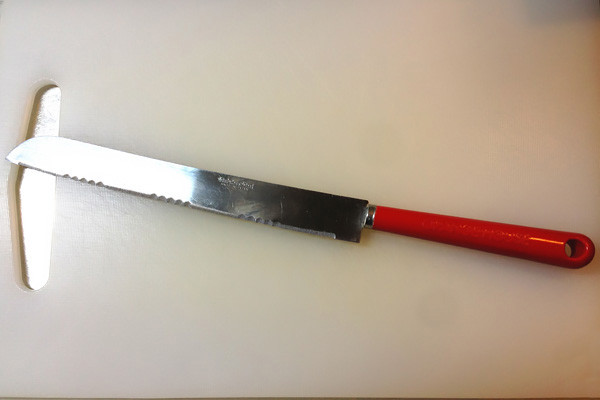
We’ve been using a freebie bread knife that came with a magazine years ago. The handle says “ORANGE HOUSE.” Not Orange Page (the Japanese magazine)…so what is this brand? The grip is plastic and the blade seems like basic stainless. I never learned how to sharpen bread knives, so I’ve let it ride for years.
We’re a bread-for-breakfast household—usually 6–8 slice loaves. When we buy a fresh-out-of-the-oven loaf that the shop won’t slice, we cool it at home and cut it into six slices. Crumbs everywhere, but I assumed that was normal and lived with it.
Failing miserably at crusty bread
Kobeya’s supermarket baguettes are barely manageable. But crusty loaves from specialty bakeries? Hopeless. The blade skates over the crust; if I press harder it tears and crumbles the crumb. Technically “cut,” but with heaps of crumbs and a slightly squashed loaf. Sad every time.
A mom friend who bakes at home mentioned she uses a branded-looking bread knife. That got me curious: what kinds are out there, what price tiers, and what would suit a casual bread slicer like me? Time to research—on Amazon Japan, naturally.
TL;DR (what I learned): Most options cluster around ¥1k, ¥3k, and ¥5k+. Wave serrations cut hard crusts better than scalloped ones. Hardened stainless (molybdenum/vanadium) holds its teeth longer than plain stainless. Full-stainless handles look premium and can go in the dishwasher. Electric bread knives exist but are noisy and bulky.
Bread knife types
Price brackets (street)
- Around ¥1,000
- Around ¥3,000
- ¥5,000 and up
Around ¥2,000 the steel quality improves; above ¥5,000 you start paying for brand and design. The sweet spot seems 2–3k.
Blade shapes
Bread crust is firm while the inside is soft, so you can’t push straight down like meat or veggies. You need a saw motion, hence the wavy/serrated edges.
Wave serration
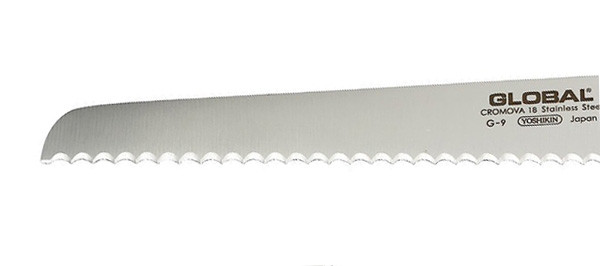
Pointed, wave-like teeth (think rough seas). Great for hard bread. Almost everything on Amazon uses this.
Scalloped serration
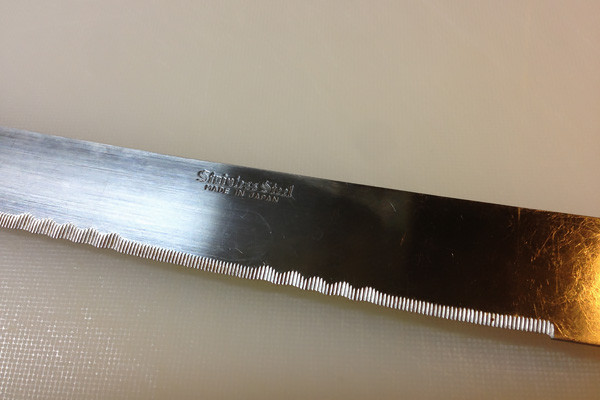
Rounded serrations, no sharp points—better for soft bread. Turns out my freebie was this type, so it was never meant for hard crusts. Figures.
Blade material
- Stainless
- Hardened stainless with molybdenum/vanadium added
Pure carbon steel knives are high-maintenance and more for pros. Most household knives (bread knives included) are stainless-based.
Stainless is rust-resistant but softer than carbon steel, so edge retention suffers. Adding molybdenum/vanadium makes a tougher stainless that keeps its bite longer.
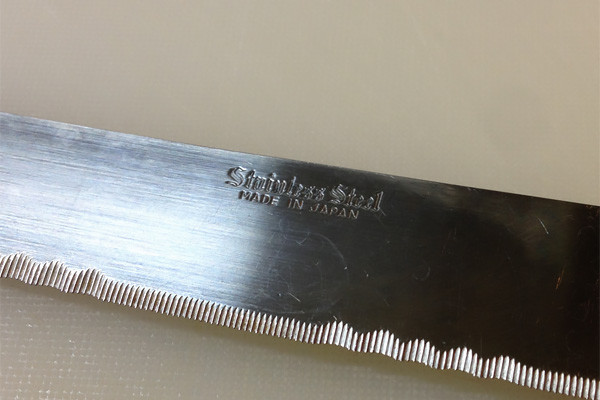
Sub-¥1,000 knives are usually plain stainless; above that, most are the hardened kind. Mine was a magazine freebie—plain stainless, of course.
Each maker labels it differently: “special stainless,” “molybdenum steel,” “molybdenum vanadium stainless blade steel,” “super-hard stainless steel,” etc. GLOBAL (Yoshikin) uses the last one; same idea, just better marketing. Translation: harder than regular stainless, dulls slower (exact hardness/toughness varies by blend).
Handle material
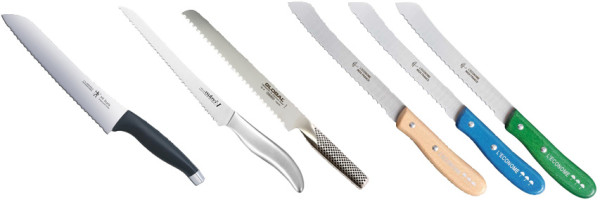
Wood used to dominate; plastic is now common to cut costs, and some knives are all-stainless from blade to butt.
Wood can rot if water seeps in, eventually loosening the blade. Waxing or resin sealing (called “handle filling” in Japanese) prevents that. Plastic or one-piece steel avoids the issue—though bread knives rarely get soaked anyway.
One-piece steel often means dishwasher-safe. For a bread knife that mostly meets crumbs, this felt like overkill—unless you slice overstuffed sandwiches.
And, let’s be honest, all-silver knives just look fancy. My eyes are used to silver blade + black handle, so a fully silver knife feels special.
Electric models
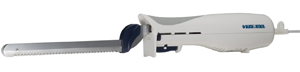
BLACK+DECKER 電動ブレッド&マルチナイフ EK700(3,000 円/104 件のレビュー)
Surprise: there are electric bread knives. They look like mini reciprocating saws. They cut great, but they’re big, loud (think blender), and the cord is fussy. I’m not that serious, so I’ll pass.
Bread knife makers (Amazon JP roster)
I’m only looking at Amazon, so boutique store brands won’t appear (no Güde, but Laguiole is there). Here’s what I found.
KAI
Famous to Japanese men for nail clippers and razors; they also make baking tools and beauty gadgets. Their “Sekimagoroku” line is the classic knife brand, and “Bready” focuses on bread tools. Bready knives are ~¥1,000; Sekimagoroku around ¥2,000.
Sekimagoroku is a historic name dating to the Muromachi period. It’s as famous in Japan as Solingen is in Germany—like saying Muramasa or Masamune. Legendary name, ¥2,000 price tag!
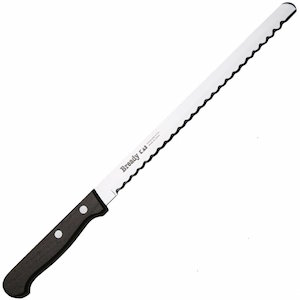
ブレッディ(1,064 円 / 360 件のレビュー)
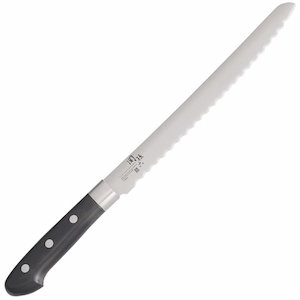
関孫六(1,897 円 / 167 件のレビュー)
Shimomura Kogyo
Knife maker from Sanjo, Niigata, with 140+ years of forge history. Their Amazon bread knife is the all-stainless “Verdun” (~¥1,000), and they also sell a Damascus-like UN-RYU for ¥18,000—serious blacksmith energy.
They make inventive blade-based gadgets too, like an apple peeler.
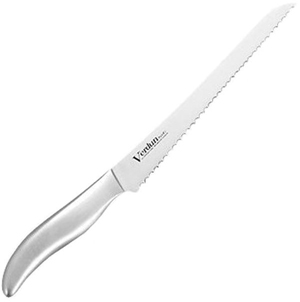
ヴェルダン(1,154 円 / 314 件のレビュー)
Sato Kinzoku Kogyo
Founded 1976 in Tsubame, Niigata. Makes metal tableware and goods. Their bread knife is Amazon’s cheapest; reviewers are perplexed at the price. Maybe “you get what you pay for.”
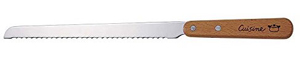
SALUS キュイジーヌ(441 円/5 件のレビュー)
VICTORINOX
The Swiss Army Knife company. The name combines the founder’s mother Victoria plus “inox” (stainless in French). Charming, right?
Their SwissTools are catnip to gadget-loving men—you want one even if you don’t know why.
They’ve made kitchen knives since the beginning and later added corkscrews and such. Wenger, another Swiss bread-knife fave, was acquired by Victorinox but keeps its brand.

スイスクラシック(3,882 円/8 件のレビュー)
They also sell a wave-serrated petty knife—cheap (just under ¥1,000), handy for veggies and fruit, and beloved in reviews. Lots of colors.
Yanagi Sori
Industrial designer famous for chairs and kettles; often seen in stylish shops. We own his kettle, knives, and spoons—though the spoon shape feels off, so we rarely use it. The butter knife is great. Cute look overall, slightly pricey.

ブレッドナイフ 21cm(5,505 円/40 件のレビュー)
GLOBAL (Yoshikin)
Despite the name, a Japanese company: Yoshida Metal Industry, aka YOSHIKIN, also in Tsubame, Niigata. Founded in 1954 as a tableware maker; by 1960 they were making stainless knives. The GLOBAL line has been loved worldwide for 30+ years.
They have a showroom in Roppongi. Even their site looks slick. The knives look slick too.
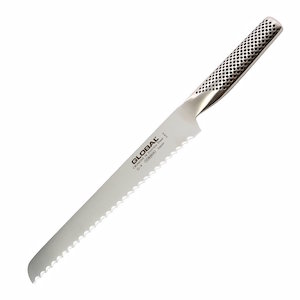
パン切り 刃渡り 22cm(8,640 円/21 件のレビュー)
L’ECONOME
French knife maker founded 1918. The three-umbrella logo and colorful wooden handles are adorable—very “French shop” vibes, so you see them in design stores like The Conran Shop.
Handle colors include natural, blue, green, brown, beige, red, yellow, and more.
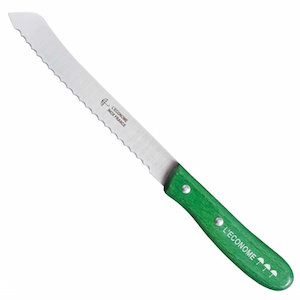
ブレッドナイフ(3,651 円/レビューなし)
HENCKELS
Brand of ZWILLING J.A. Henckels AG from Solingen, Germany—knife-famous like Seki City in Japan. Founded 1731, now also sells tableware and kitchen goods.
ZWILLING and HENCKELS are sibling brands; HENCKELS is the more affordable. They localize product lines by country.
The official site photography is gorgeous—too bad I can’t read German. “AG” at the end just means “corporation.”
ZWILLING J.A. Henckels AG | Marke für hochwertige Messer, Kochgeschirr, Beauty
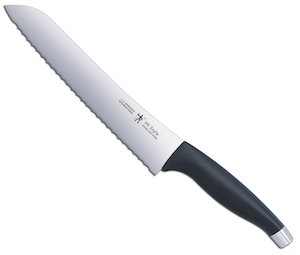
ベルリン パンナイフ(2,383 円/6 件のレビュー)
Laguiole
French maker famous for sommelier knives. Spelled Laguiole, pronounced “lah-gyol” or “lah-yol.” Laguiole is also a village known for blades. The bread knives have that elegant Laguiole look.
The brand story is messy—like how multiple places sell “Yubari melon.” These links explain:
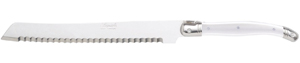
ブレッドナイフ(3,651 円/1 件のレビュー)
Fujitora Kogyo
Founded 1953 in…Niigata again! Tsubame City supremacy. Say something rude and you’ll get julienned.
They started with farm tool parts and blades, then moved to kitchen knives two years later. Their brand “Tojiro” is better known, so the site is tojiro.net. (Fun detour: fujitora.com is a Russian medical device company. The logo cracked me up.)
 “Is the ‘World Government’ some kind of god?”
Their site has deep knife nerdery:
Speaking of nerdery, the chairman of venerable knife shop Kiya wrote epic essays too:
To solve this mystery, let’s think back to the universe and the earth right after it was born.
刃物考 > 会長の話3 鋼はなぜ錆びるのか - 日本橋 木屋
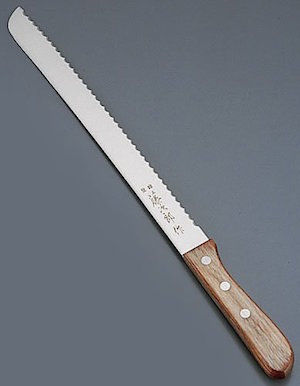
藤次郎 パンスライサー(1,729 円/7 件のレビュー)
How quickly bread knives dull
Amazon reviews say the cheap ones cut “fine, I guess,” while pricey ones get “INCREDIBLE!” hype—probably price bias. What worried me were expensive knives with reviews like “great at first, dull soon after.” Even super-hard steel loses bite eventually.
Cheap knives can be replaced, but a ¥5,000+ branded one is harder to toss. So: how do you maintain them?
Can you sharpen a bread knife?
Regular knives take a whetstone or slot sharpener. Bread knives with serrations are “basically” unsharpenable. Bakeries sometimes treat them as consumables and swap when dull.
If you must sharpen, a rod-style sharpener works better than a slot-type. Some rods are marketed for bread knives.
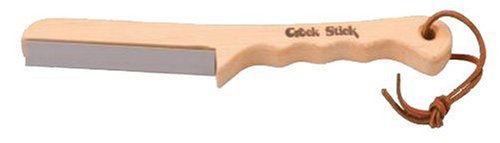
LANSKY パン切りナイフ用 シャープナー(2,643 円/15 件のレビュー)
Fujitora’s knowledge base explains more:
波刃形状や特殊な包丁の場合
波刃やノコ刃など特殊な刃が付いている物は角砥石でそのまま研ぎ直しはできません。波刃などはスティック状の丸棒砥石などで波刃一つ一つを研いでいく必要があります。 また、ノコ刃の場合は角棒砥石やヤスリなどでノコ刃の面を削る必要があります。製造メーカーでも波刃やノコ刃の研ぎ直しを行っていることは少なく、消耗品として考えた方が良いと言えます。
:::砥石の選び方 - TOJIRO:Net:::
The baking school Goûter Dominique randomly published a bread-knife sharpening guide—probably for students, but it’s concise, so here’s the link: https://drive.google.com/file/d/0B7gLUzuEfLvAcXFmQWhnOUc2a0k/view
Some professional sharpeners will also take serrated knives (about ¥2,000). I assume they go to town with rod files.
What looks best for me
- If I want the all-silver look: Shimomura Verdun.
- If I want a normal look: Fujitora Tojiro.
- As a sub-knife: Victorinox vegetable/serrated petty.
All under ¥2,000. I’m sold on Tojiro partly because their website is delightfully dense. Plain stainless is fine; I’ll sharpen as needed.
Search for 藤次郎 パン切り包丁 on Amazon and you’ll also see higher models: DP cobalt alloy, molybdenum-vanadium, all-stainless, etc. Prices jump to ¥5,000+, but I’ll wait—if I love the lower model, I’ll step up.
The depressing thing I learned afterward
Pros often just use a chef’s knife (gyuto) to cut bread. Serrated blades are hard to sharpen, so they prefer a standard blade they can maintain. Same sawing motion as a bread knife.
The cut surface apparently stays smoother, changing mouthfeel for some breads. So cruel—says the person eyeing a ¥30k Tojiro Pro nickel Damascus gyuto (this one).